The Hidden Cost of Payment Complexity at Scale
Payment complexity doesn't announce itself. It just compounds.

Contents
Explore With AI
Nobody plans to build a complicated payment stack. It happens incrementally, one workaround at a time, until one day you realize your team is spending more time managing your infrastructure than building your product.
This is one of the most common — and most underestimated — scaling problems for B2B platforms and fintech companies. And the costs are rarely visible until they've already compounded.
How Complexity Accumulates
Payment infrastructure debt accumulates the same way technical debt does: through a series of individually reasonable decisions that collectively create a system nobody would have designed on purpose.
It starts simply. You pick a PSP, open a bank account, and start processing. You add a wire capability when a customer needs it. You bolt on a compliance tool when your existing bank flags an issue. You build a reconciliation spreadsheet because the data doesn't line up between systems. You hire someone to manage the reconciliation spreadsheet.
By the time the problem is visible, you have four vendors, three bank relationships, two ledgers, and a team of people whose jobs exist entirely because your infrastructure doesn't.
The Costs Nobody's Accounting For
When companies evaluate their payment infrastructure, they tend to look at direct costs: transaction fees, monthly minimums, and API pricing. What they miss are the operational costs that don't show up on a vendor invoice.
Reconciliation overhead. Every additional payment rail or vendor introduces a new reconciliation surface. If your stablecoin flows are tracked separately from your ACH flows, someone is matching them at the end of every month. At scale, this is a meaningful labor cost with a high risk of errors.
Compliance fragmentation. KYB and transaction monitoring that's spread across multiple vendors means no single view of your counterparty risk. That's both an operational problem and a regulatory one. Examiners expect you to know your customers across every channel you use to serve them.
Vendor management drag. Each additional vendor relationship means onboarding, SLA negotiation, support escalation paths, and contract cycles. Finance, legal, and engineering all absorb this cost invisibly, until someone does the accounting.
Speed-to-market impact. The less flexible your payment infrastructure, the harder it is to launch new products, enter new markets, or support new customer use cases. Companies with rigid stacks spend engineering cycles on payment maintenance instead of product development.
The Inflection Point
There's usually a trigger, a compliance audit, a new product launch that the stack can't support, a reconciliation error that gets expensive, a key hire who walks in and says, "How are you doing it this way?" which forces you to reconsider your entire approach.
At that point, the conversation shifts from "what does our payment infrastructure cost" to "what is it costing us not to fix it."
What Modern Infrastructure Actually Changes
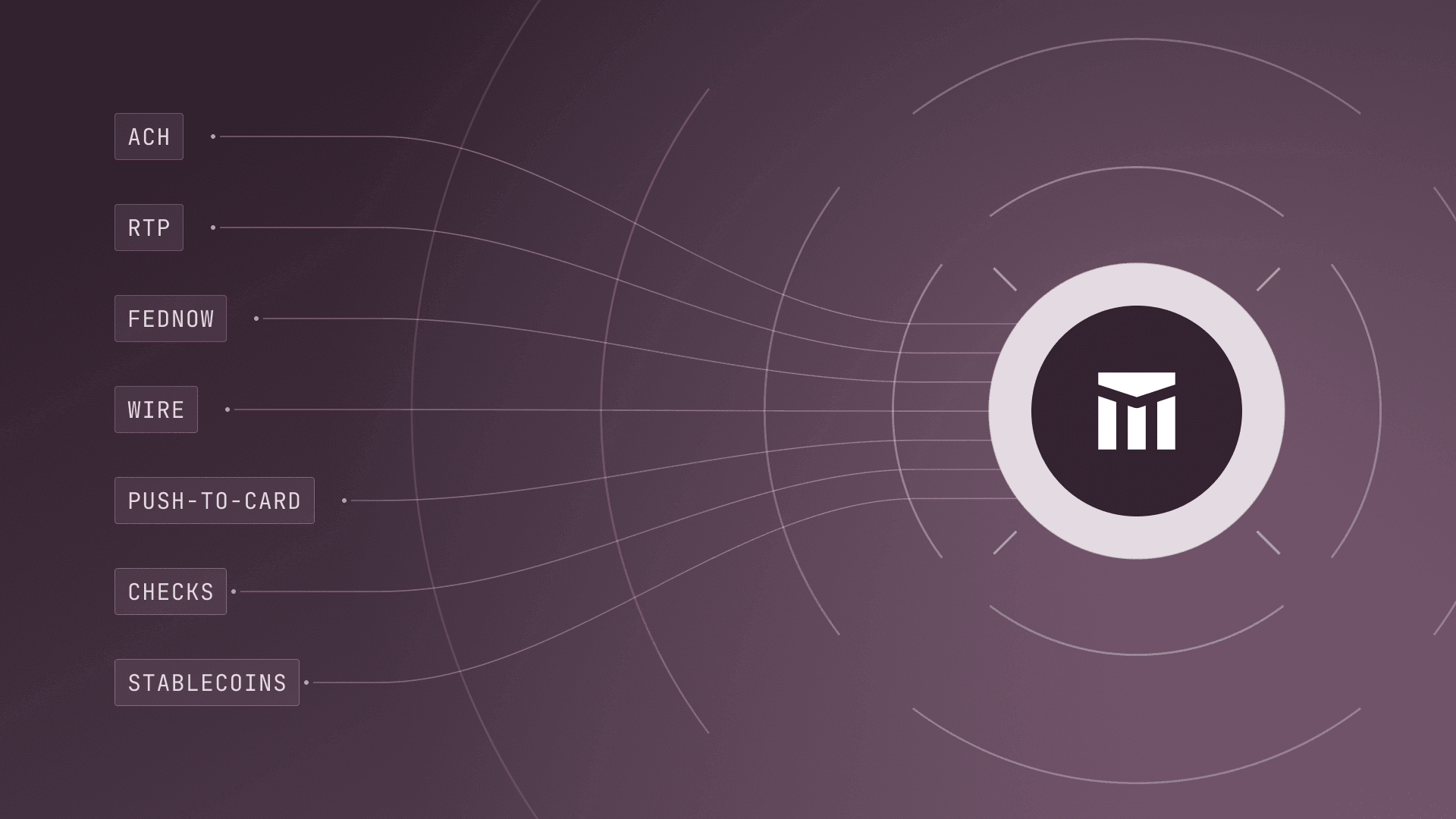
The companies that get this right aren't necessarily spending more on payments — they're consolidating. A single programmable ledger that handles multiple rails, supports FBO account structures, and plugs into compliance workflows removes the workarounds rather than adding to them.
The specific outcomes tend to cluster around a few things: reconciliation that doesn't require a dedicated team, KYB and transaction monitoring that works across all your payment types, and a stack that can support new rails or new geographies without a full engineering project.
More than anything, it changes the posture of the payments function from reactive to intentional. From a system you're managing around to one you're actually in control of.
The question worth asking isn't whether you'll eventually need to address payment complexity. It's whether you'll address it on your own terms or wait until the costs force the decision for you.
Most companies don't know what their payment complexity is really costing them — until they do the math.
Get the latest articles, guides, and insights delivered to your inbox.
Authors

Matt Craig is the Product Manager for Payments at Modern Treasury, responsible for architecting the company’s multi-rail platform that unifies bank rails and stablecoins into a single, developer-friendly system. Before joining MT, he built Payflows’ global treasury management platform with integrations to 50+ banks and held product and operations roles at Qonto and Back Market overseeing high-volume payouts and risk systems.