What Is a Payment Service Provider?
Feature Comparison
| Capability | Payment Processor | Integrated PSP (Modern Treasury) |
|---|---|---|
| What is managed | Transaction routing and settlement. Bank relationships, compliance, ledgering, and reconciliation are the platform's responsibility. | Bank relationships, rail certifications, compliance, real-time ledger, reconciliation, and sub-account infrastructure. |
| Payment rails | Typically card-first. ACH, RTP, FedNow, wire, checks, and stablecoins vary — often limited configurability. | ACH, RTP, FedNow, wire, push-to-card, checks, and stablecoins (USDC) through one API. Each rail independently configurable. |
| Bank relationships | Processor holds the bank relationship. No visibility or control over underlying partners. | Launch with Modern Treasury's bank partners or bring your own. Operate across multiple institutions without re-architecting. |
| Real-time ledger | Per-account transaction history only. No unified double-entry ledger across entities or rails. | Ledger-backed and audit-ready. Powers $600B+ in payments. |
| KYC / KYB / AML | Typically a separate product or third-party integration. | Built-in, or bring your own program. No assembly required. |
| Reconciliation | Custom-built internal tooling. Your team owns matching, returns, and exceptions. | Automated across banks, rails, and internal accounts. Returns and exceptions handled without custom tooling. |
| Sub-accounts | Available on some processors, but optimized for card-based splits, not B2B fund management. | Programmable sub-accounts for funds, balances, and flows across entities. |
| Multi-bank routing | Typically locked to one banking partner. Adding a second is a new integration. | Route across multiple banking partners through configuration, not code. |
| Stablecoin support | Not part of most processors' core platforms. | Stablecoins run on the same platform as fiat. No separate integration required. |
| Ongoing maintenance | Bank changes, compliance updates, and rail certifications are your team's responsibility. | Handled by Modern Treasury. Your team focuses on your product. |
Where Traditional PSPs Hit Their Limit
Compliance at scale
As you add sub-accounts, new rails, and third-party funds, compliance requirements expand. Each addition means new vendor integrations and monitoring your team must assemble and maintain.
Ledgering and reconciliation
A payment processor gives you transaction history, not a unified ledger. Without real-time ledgering, reconciliation becomes manual — and at scale, unreconciled items accumulate fast.
Multi-rail coverage
Adding RTP, FedNow, or stablecoins on a standard processor typically requires a separate integration, separate bank agreement, or a different provider. Each new rail is its own project.
Bank lock-in
Most processors hold the bank relationship and give platforms no visibility into what's underneath. Switching banks or adding redundancy means a significant migration.
Payments Processed
Across Fiat and Stablecoins
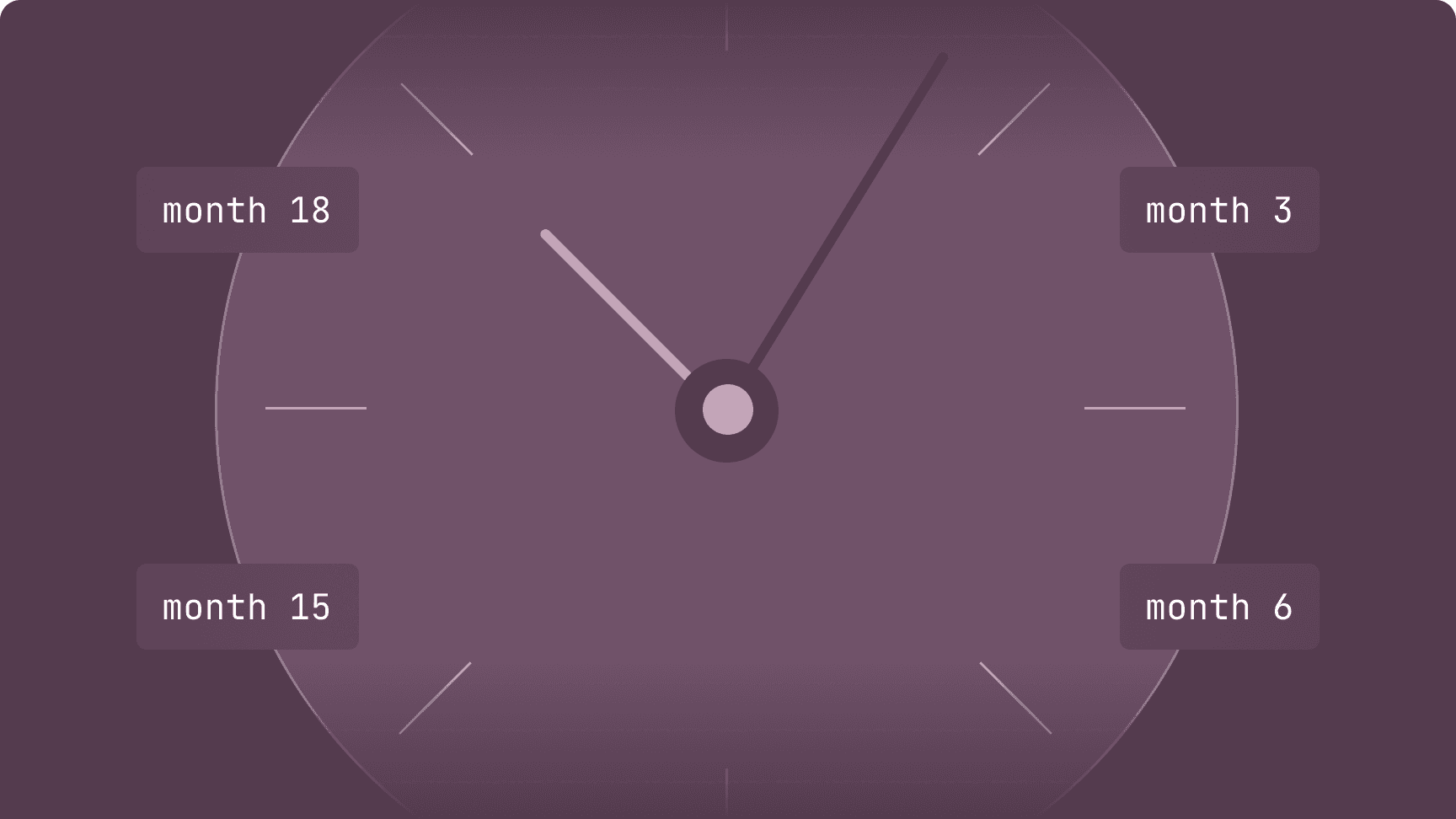
Not Months to Go Live
Different Platforms, Different Infrastructure
A payment processor is the right call when:
- Your platform is card-first and consumer-facing
- You need simple payouts, not complex flows or splits in payouts
- Compliance, ledger, and reconciliation are handled by a separate internal system
- You are already deeply integrated with a processor and the switching cost is not justified by the gaps
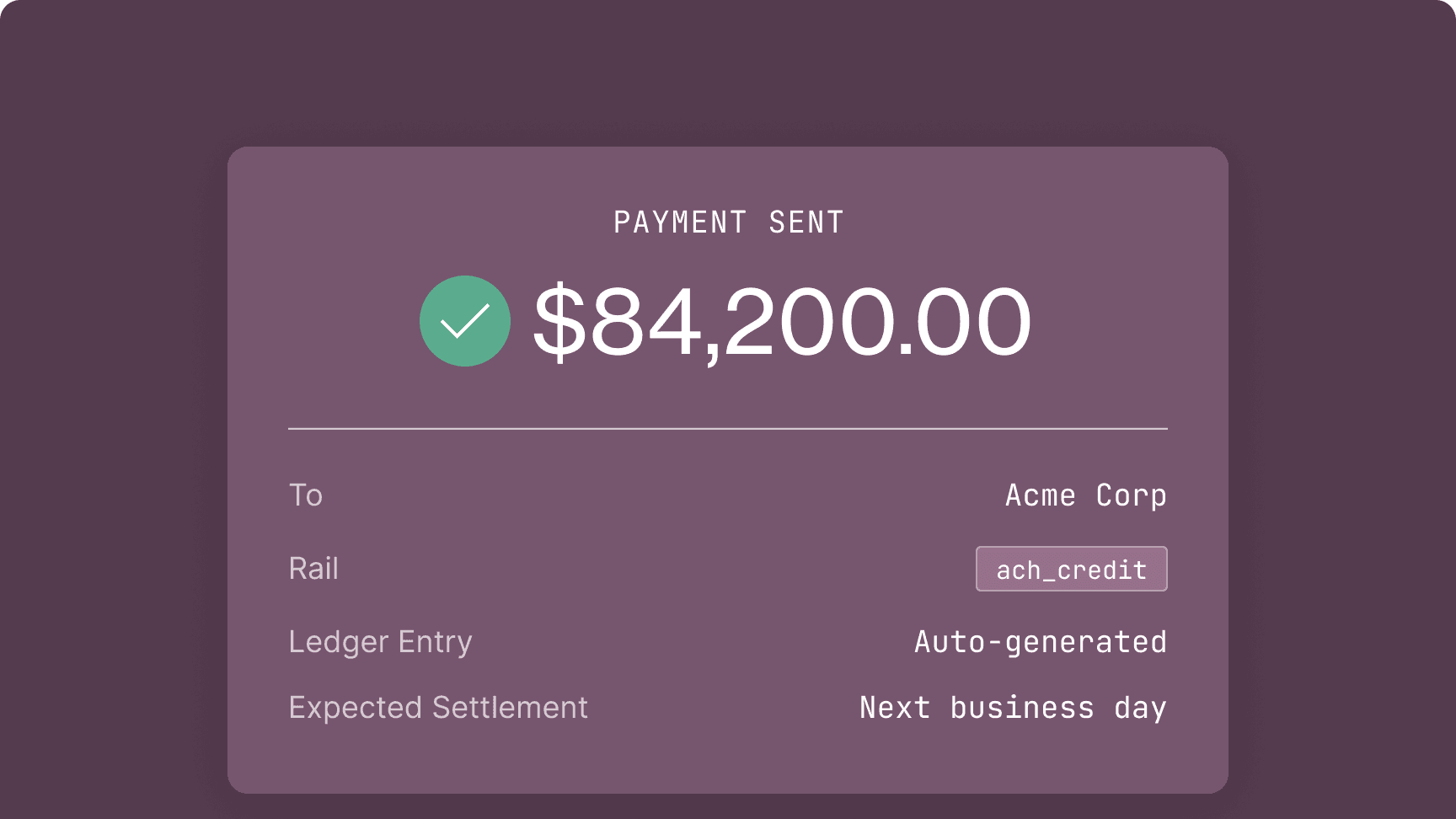
Modern Treasury is the right call when:
- Your platform moves money via bank rails — ACH, RTP, FedNow, wire, or stablecoins
- You need compliance, ledgering, and reconciliation built in, not bolted on
- You're managing funds on behalf of customers or third parties and need a production-grade ledger
- You need multi-rail and multi-bank coverage through one API
- Go live in days, not months
Common Questions About Integrated PSPs
An integrated PSP (payments service provider) handles the full infrastructure stack underneath a platform's payment product — not just transaction routing. This includes bank relationships, payment rail certifications, KYC/KYB/AML compliance, real-time ledgering, reconciliation, and sub-account management. Modern Treasury is an integrated PSP built for B2B platforms that move money via bank rails. The distinction from a payment processor is operational: an integrated PSP takes ownership of the infrastructure so platforms do not have to build or staff those functions themselves.
Yes. KYC, KYB, and AML are built-in capabilities of an integrated PSP — not add-ons or third-party integrations the platform has to procure separately. Modern Treasury includes compliance infrastructure as part of the platform. Platforms can also bring their own compliance program if they have existing KYB or AML infrastructure they want to retain at scale. Both modes are supported without requiring a platform to switch providers as compliance requirements evolve.
There's no minimum volume. What matters is payment complexity, not how much you're processing. Teams usually reach Modern Treasury when they add a second rail, when reconciliation and compliance start eating engineering time, or when they want multi-rail support without building it in-house. Plenty of our customers come to us early, before volume is the issue, because they'd rather invest in their product than in payment plumbing. The clearest signal isn't a number. It's your engineers maintaining payment infrastructure instead of building your core product.
Programmable sub-accounts let platforms create and manage accounts on behalf of their customers, business units, or counterparties — with real-time balances, transaction history, and automated reconciliation. In Modern Treasury, sub-accounts are first-class infrastructure: ledger-backed and API-controlled, designed for B2B fund management across multi-entity structures. This differs from marketplace accounts in consumer processors, which are optimized for card-based revenue splits rather than fund segregation at scale.
Yes. Modern Treasury's Bring Your Own Bank model supports platforms that want to use existing bank relationships alongside Modern Treasury's partners. You can start with Modern Treasury's bank partners to go live fast, then add your own bank relationships as you scale. Your integration, ledger, and API contracts stay the same regardless of which banking partners are underneath.
A full-stack integrated PSP supports ACH (standard and same-day), RTP (Real-Time Payments), FedNow, wire transfers, and stablecoins such as USDC — through a single API. Modern Treasury supports all of these on one platform, with each rail independently configurable for routing, limits, and return handling. Platforms should confirm which rails are first-class versus abstracted — some providers list rail support but route everything through a single endpoint that limits operational control.
A payment processor is the right fit for card-first consumer platforms, gig economy marketplaces, and businesses that need simple payouts or card splits rather than B2B fund management. If your compliance, ledgering, and reconciliation are already handled by a separate internal system — and you do not anticipate needing multi-rail coverage or sub-account infrastructure — a processor may be sufficient. An integrated PSP is the right choice when those capabilities need to be part of the payment infrastructure itself, not assembled separately.