2026 Fintech Predictions: Key Trends in Payments, Banking, and Financial Infrastructure
In 2026, fintech will shift from experimentation to production. Instant payments will become mainstream across payroll and treasury operations, stablecoins will cross the enterprise threshold, cross-border payments will settle in minutes instead of days, compliance will move to real-time, and programmable payments will redefine how businesses move money.

Explore With AI
2025 was a wild year for fintech, and the innovations that broke through last year will play a stronger role in global money movement this year. After years of experimentation across real-time payments, stablecoins, embedded finance, and treasury infrastructure, 2026 will be the year these technologies move from pilot programs into production workflows across enterprises, banks, and fintech platforms.
We spoke to our team to get their predictions and hot takes to kick off the new year.
1. Instant Payments Become Mainstream in the US (Beyond ACH and Early Use Cases)
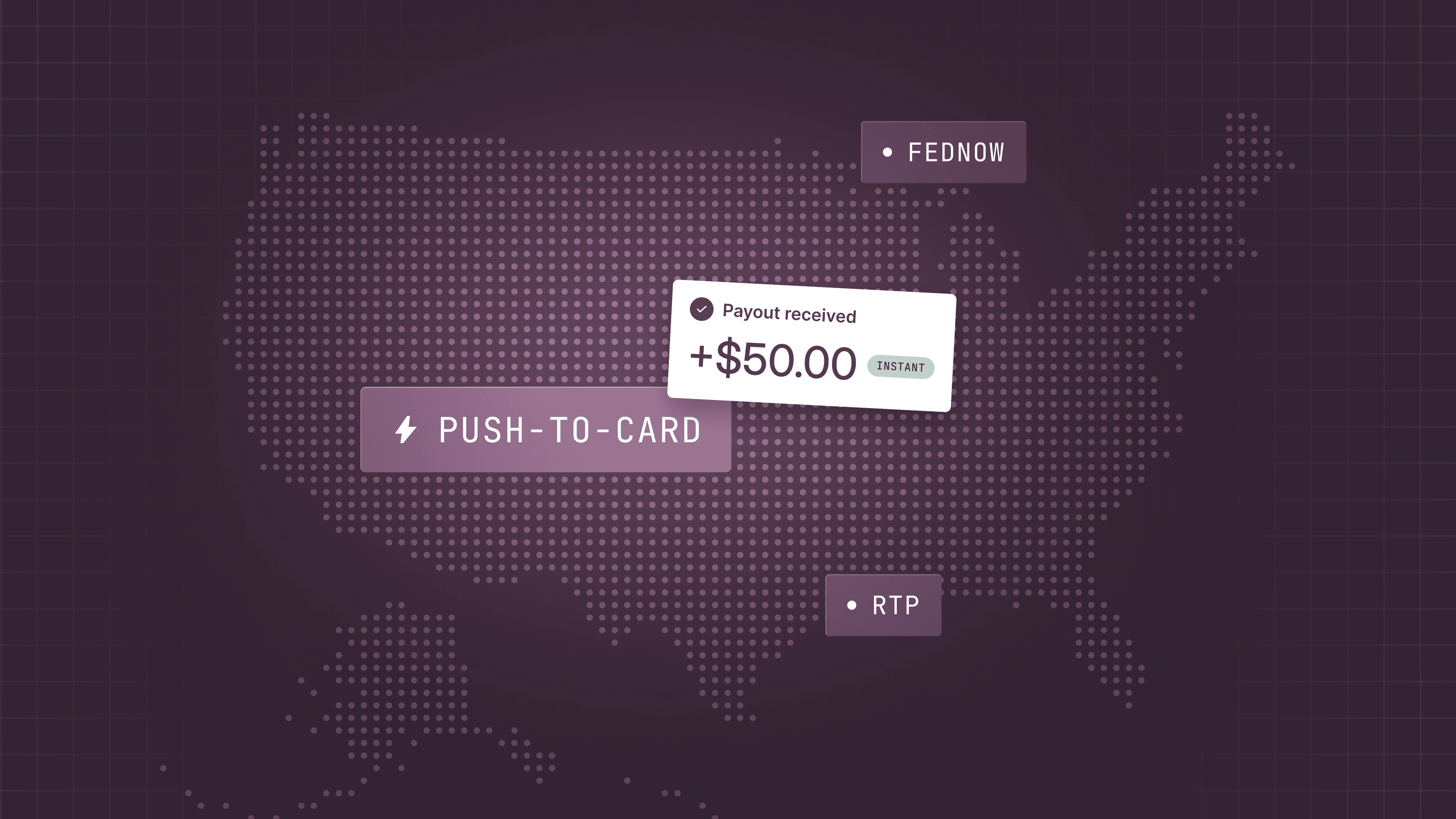
In 2026, bank-based instant payments like RTP and FedNow will move beyond early adoption and become standard for payroll corrections, liquidity management, supplier payments, and treasury operations. What began as a faster alternative to ACH is now proving its value across a growing set of real-world, high-impact workflows. Instant payments are gaining durable traction in areas like early wage access, payroll corrections, just-in-time supplier payments, liquidity management, and treasury operations, where speed and certainty matter most.
Banks are no longer treating instant payments as experimental or peripheral. Instead, they’re investing in them as dependable, revenue-generating capabilities and actively encouraging broader corporate adoption.
2. Stablecoins Enter Enterprise Treasury and Cross-Border Operations
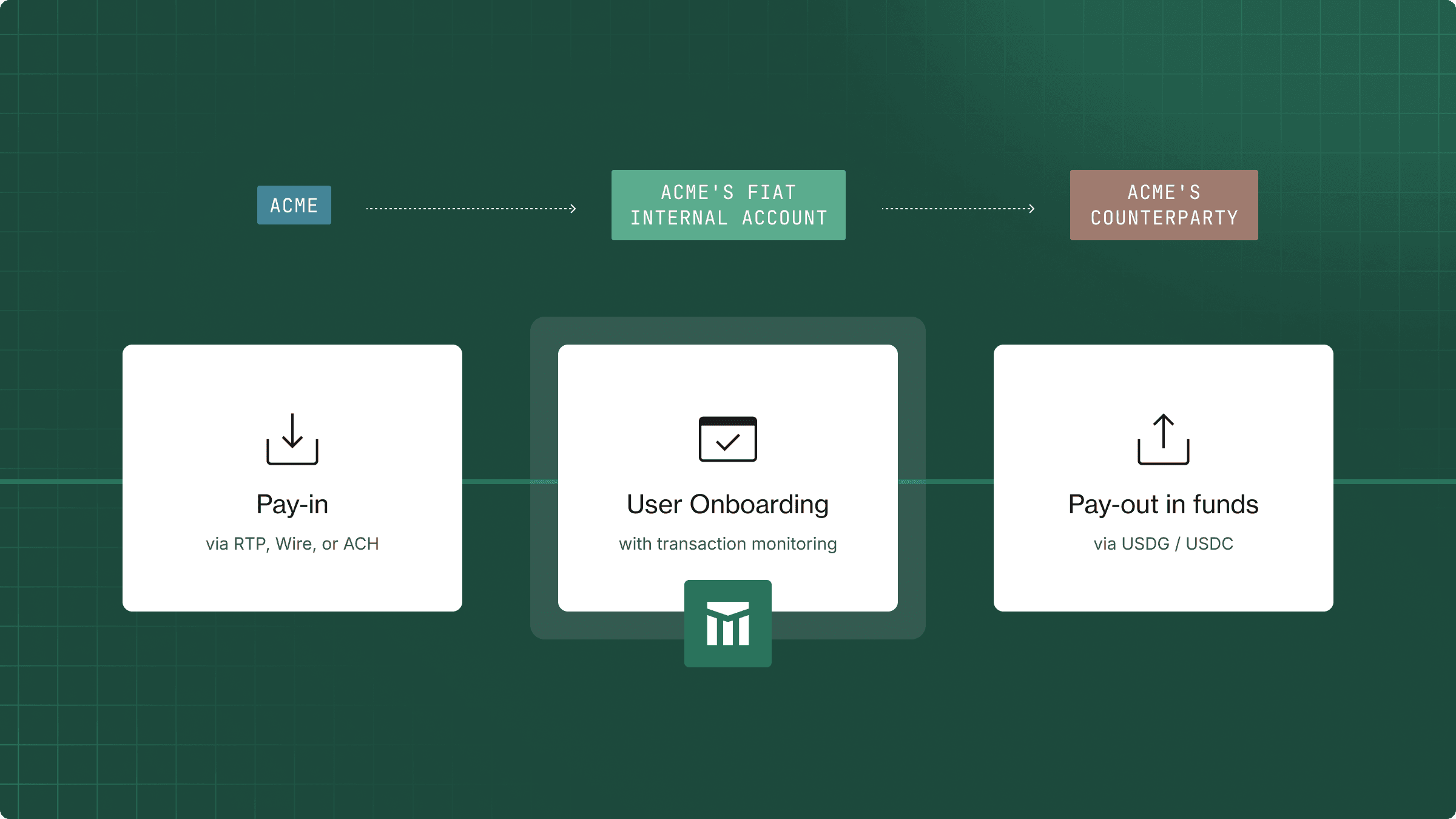
In 2026, stablecoins will no longer be viewed as crypto experiments, but as regulated financial instruments used for liquidity management, cross-border settlement, and treasury optimization. At least one Fortune 100 company will announce they’re using stablecoins for global treasury operations. Not as a PR stunt—as an operational efficiency play. The use case: liquidity management and cross-border settlement, where traditional rails are slow and expensive, especially for long-tail currencies.
Enterprise adoption hinges on regulatory clarity and infrastructure that integrates seamlessly with existing ERP and TMS. In 2026, we'll see CFOs get comfortable with regulated stablecoins that address custody, reporting, and risk management concerns. After internal experimentation, they will roll out stablecoin-enhanced payment capabilities to their customers. They will opt to use known, trusted vendors to undergo this overhaul.
3. Fast (and Cheap) Cross-Border Payments Become Accessible for Everyone
In 2026, interoperability between traditional payment rails and compliant digital assets will reduce cross-border settlement times from days to minutes, making fast and affordable international payments accessible to businesses of all sizes.
Cross-border payments have been slow and expensive for decades. Improvements have been made, but only global corporations get “best-in-class” services here from the Tier 1 banks. Smaller companies have fintech options, but they are still expensive. Simple tools are becoming available for businesses of any size to access. And SMEs—who've been squeezed hardest by high FX fees and unpredictable timing—will be the first movers.
4. The Neobank Era Slows as Financial Infrastructure Platforms Win
In 2026, the neobank boom will slow as infrastructure-first fintechs and embedded finance platforms capture more value by enabling payments and financial services across existing platforms.
The neobank boom will slow down. Most won’t survive. The jury is still out on whether a net-new disruptor will break out by being global by default with stablecoins and leveraging on-chain yield, or whether scaled incumbents like Nubank and Revolut will simply plug in the same features for their existing customers and continue to win.
Embedded finance will see a renaissance, as it enables any platform to offer financial services without needing to become a bank.
The market is bifurcating: horizontal platforms that win through payment expertise, scale, and breadth of capabilities, and vertical SaaS players that win through deep specialization in specific industries. The middle will disappear.
5. A Small Number of Fintechs Secure Bank Charters and Compete Directly
In 2026, a handful of scaled fintechs will obtain bank charters and compete directly with sponsor banks and infrastructure-focused financial institutions, increasing competition and pricing pressure.
Bank charters are more attainable than they once were, but they still require significant time, effort, and regulatory commitment. At the same time, many neobanks die trying. According to Federal Reserve research, upstart banks had lower survival rates than existing banks. That will not change, and is already playing out as more charters are granted.
6. The Dollar Becomes Even More Important - And So Does U.S. Banking Infrastructure
In 2026, as stablecoins gain popularity and regulatory clarity, the primacy of the U.S. dollar (USD) also rises. Companies outside the U.S. can operate in USD more easily, and for more of their domestic needs. That means that the primacy of U.S. banking infrastructure, BaaS infrastructure, and wallets and accounts for non-U.S. residents become a bigger opportunity. We’ll see that continue to grow as non-U.S. individuals and businesses live their daily financial lives in USD, USD-backed stablecoins, stablecoin-backed cards, and accounts at U.S.-based financial institutions.
7. Compliance Shifts to Real-Time Reporting and Continuous Auditability
In 2026, regulators will expect real-time visibility into transaction flows, forcing companies to embed compliance and reporting directly into their payments and ledger infrastructure.
Regulators are done waiting for quarterly reports. They want real-time visibility into transaction flows and to see the data lineage that proves every number.
This forces a fundamental shift: reporting and compliance can no longer be an end-of-quarter scramble. It has to be built into the infrastructure. Companies need modern ledgers that provide continuous, auditable records of all money movement—not reconstructed from payment processor statements, but captured at the source. And internal and external teams need the APIs and reporting software to surface information to them on demand, as they said in the early days of the internet, information at their fingertips.
Risk teams will shift from reactive (investigating fraud after it happens) to predictive (using analytics to forecast exposure before transactions settle).
8. Payments Become Programmable Through APIs
In 2026, programmable payments will gain adoption as businesses embed conditional logic directly into payment workflows using APIs, enabling automation based on invoices, delivery, and contract terms.
Think: "Release funds when an invoice is verified and goods are received" or "Split payment between multiple parties based on contract terms."
This isn't about blockchain or smart contracts in the crypto sense. It's about embedding business logic directly into payment flows through APIs. Industries with complex payment workflows—such as logistics, construction, healthcare, and marketplaces—will adopt this first.
9. Vendor Consolidation Accelerates
In 2026, enterprises will aggressively consolidate fintech vendors, prioritizing platforms that combine payments, ledgering, and compliance to reduce integration complexity and operational risk.
Integration debt is crushing fintech teams. The average enterprise uses six to ten vendors to manage payments, and each requires custom integration, ongoing maintenance, and coordination during incidents.
10. Request for Pay Makes Its Commercial Debut.
In 2026, Request for Pay (RFP) will gain traction in commercial payments, enabling real-time, pay-by-bank experiences that reduce reliance on cards and improve cash flow efficiency.
Banks are starting to support Request for Pay, the debit direction of RTP. This will be a magical new experience, driving commercial Pay-by-Bank forward and improving the efficiency of financial operations for corporations across all industries. Implicit conventions and explicit rules around messaging and troubleshooting will start becoming commonplace, establishing precedent for companies to feel less revolutionary as they adopt RFP.
Retail investing and wallet fundings will be the primary use case for RFP, allowing users to trade faster and eliminate the delays associated with me-to-me transactions.
Learn more about how modern payments infrastructure can help you build real-time, programmable money movement.
Get the latest articles, guides, and insights delivered to your inbox.
Authors