Join us September 16th for a first look at our new Stablecoin Wallets. See it live →
How Do Real-Time Payments Change PSP Architecture? Why Control Must Move Upstream
Real-time rails like RTP and FedNow settle in seconds and are irreversible. Legacy PSPs rely on time buffers to catch fraud, run compliance, and fix errors. That buffer is gone. All checks must happen before execution, shifting control upstream to pre-execution decisioning.

I sat on one of the Federal Reserve's steering committees in the lead-up to FedNow. One thing I pushed hard on was making sure the receiving side had something to reconcile a payment against that was present at the moment the payment was sent. The goal was to give people a way to close the full loop, not necessarily by tying every payment to a master account. That experience shaped how I think about what real-time rails demand from infrastructure.
Real-time payments are not a speed upgrade. They represent a different computing model for money movement. And most payment infrastructure was not built for that model.
Why did legacy PSPs assume time was always available?
The card networks gave us a useful abstraction. You initiate a charge. Authorization runs. Settlement happens later, sometimes days later. Between those events, there is time to detect fraud, flag suspicious activity, intervene on edge cases, and reconcile inconsistencies.
ACH works the same way. Transfers take days. Returns can arrive days after initiation. Different timeline, same pattern: initiate first, handle problems later.
That buffer shaped how the entire PSP layer was built. The architecture is downstream control: initiate, track asynchronously, resolve as issues surface. For twenty years, the inefficiencies were manageable because time gave everyone a margin for error.
What changes when real-time rails eliminate that margin?
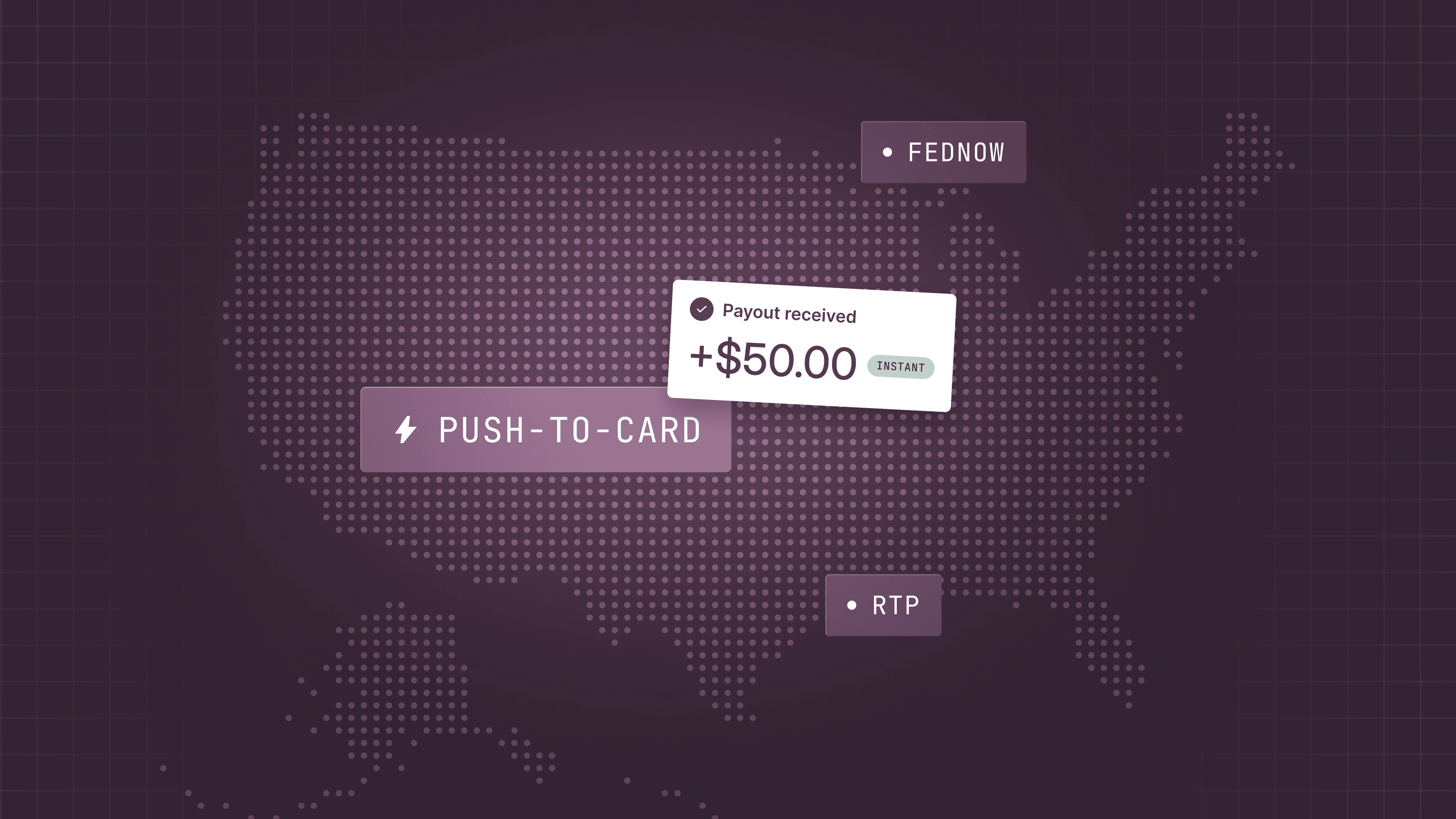
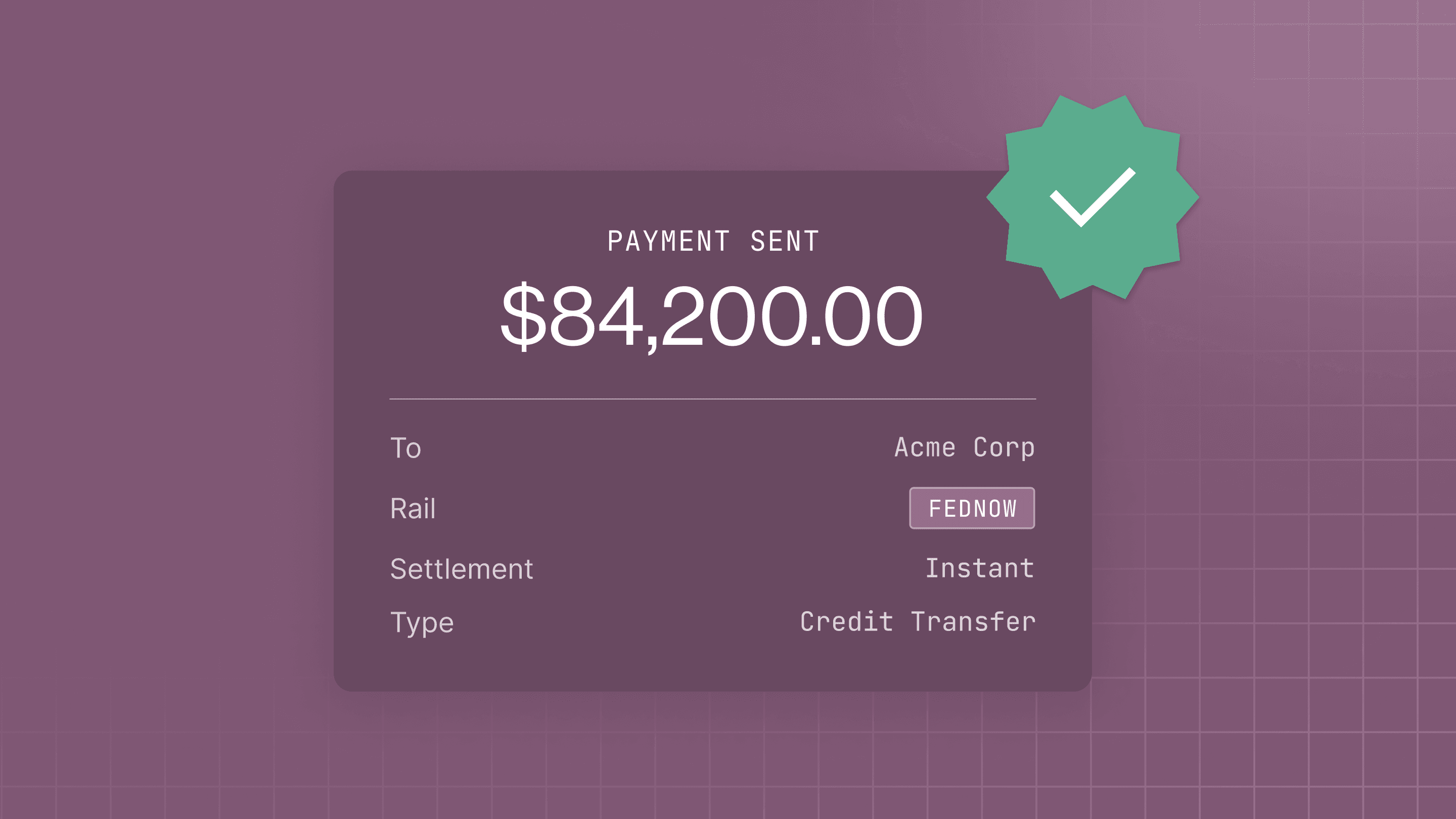
RTP and FedNow move funds directly between accounts within seconds. Once a real-time payment completes, it is final and irreversible. No settlement delay. No multi-day return window. The money is gone.
Run through a standard payout on legacy infrastructure: payment instruction goes to the PSP, PSP routes to a bank partner, bank initiates the transfer, confirmation comes back, and settlement occurs later. Failures get resolved after the fact.
Now run the same payout over RTP. Execution happens in seconds. There is no "later." An invalid destination, insufficient funding, a compliance flag that should have stopped the payment: none of that gets corrected after execution. The decision to send was the final decision.
We're moving from batch processing to streaming, from opaque to transparent. That shift requires infrastructure that can keep up.
What is upstream control and why does real-time demand it?
Upstream control means every critical decision (fraud checks, compliance screening, funding validation, approval workflows) completes before a payment instruction reaches a rail. Not after. Before.
Legacy PSPs initiate and track. They rely on downstream processes like reconciliation, exception handling, and manual review to clean up problems. That works when you have days. It does not work when you have seconds.
A platform offering instant payouts cannot run on workflows designed for delayed settlement. A company funding payments from multiple accounts cannot check liquidity asynchronously and expect accuracy at the moment of execution. We need computers talking to computers to make this work at scale. The human-in-the-loop, after-the-fact model breaks down.
What breaks when teams adopt real-time rails without re-architecting?
We see the same failure modes across companies that bolt real-time rails onto legacy infrastructure.
Fraud detection runs too late. Fraud checks that happen after payment initiation, even by milliseconds, are useless. The money is already gone.
Compliance screening runs in the wrong order. Sanctions checks, KYC validation, and regulatory holds need to be completed before execution. When compliance infrastructure evaluates in parallel with execution rather than as a gate before it, payments get through that should have been stopped.
Funding decisions use stale data. Asynchronous balance checks and real-time execution create a race condition. The funding account might have been sufficient when the check ran. By the time the payment executes, the balance has changed.
Exception handling loses its safety net. On ACH, you can retry a failed payment or process a return. On real-time rails, a completed payment is final. You have to prevent errors, because you can no longer resolve them.
What does a real-time-ready architecture actually look like?
The infrastructure layer between your application and your payment rails has to orchestrate pre-execution steps: verify the counterparty, screen for compliance, confirm funding availability, check approval workflows, validate transaction state. Only then does the payment instruction release.
That requires something legacy PSPs were never designed to provide: a coordinated, real-time view of balances, transaction state, and conditions across every provider and internal system in the stack.
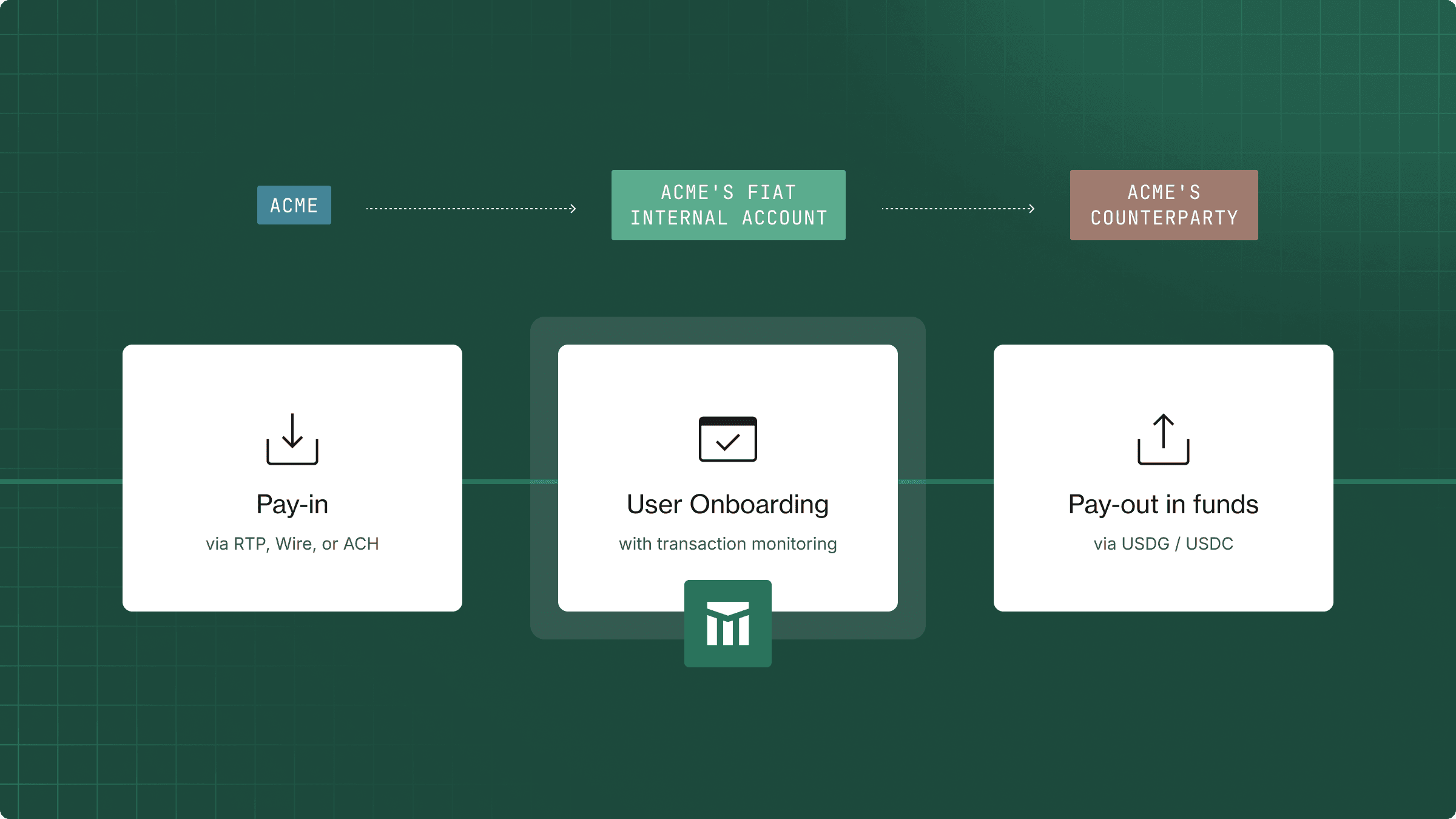
At Modern Treasury, we sought to simplify these systems. The complexity of multi-rail, multi-provider orchestration collapses into a single API surface where upstream control is the default, not something you build yourself.
How do stablecoins extend the upstream control problem?
Stablecoin networks operate outside banking systems entirely. A transfer on Ethereum or Solana can settle with cryptographic finality in seconds or less. There is no bank network mediating. There is no return mechanism in the traditional sense. Since transactions are irreversible, applications often require controls as strict as traditional real-time payment systems like RTP or FedNow.
Companies that want to support real-time bank rails and stablecoin-based payments need infrastructure that enforces upstream control across different types of settlement networks. That is an abstraction problem, not an integration problem.
The question is whether your infrastructure can enforce the right controls before money moves on any of them.
How we built upstream control at Modern Treasury
We designed Modern Treasury's workflow layer so that pre-execution control is the default, not something bolted on after the fact.
Through a unified API, you define approval workflows, funding checks, compliance gates, and state validation steps. All of them must be completed before any payment instruction releases. The internal ledger maintains a consistent view of balances and transaction state across all connected providers and rails, so funding decisions are made against accurate, real-time data instead of stale snapshots.
That model applies across every rail we support: ACH, wires, RTP, FedNow, and stablecoin networks. The upstream control layer is consistent regardless of how the payment settles downstream.
The companies that build for upstream control now will scale with confidence. The ones that don't will hit the limits of downstream control the first time they can't reverse a payment.
Read the full architectural evolution of PSPs in our Practical Guide to PSPs in 2026.
Frequently asked questions
What is upstream control in payment infrastructure?
Upstream control is an architectural pattern in which all critical decisions about a payment (fraud screening, compliance checks, funding validation, approval workflows) occur before the payment instruction is sent to a rail, not after. It is the opposite of downstream control, where issues are caught and resolved through reconciliation, exception handling, and manual review after initiation.
Why can't legacy PSPs support real-time payments natively?
Legacy PSPs were built around card and ACH payment flows, where settlement is delayed, and there is time to catch errors after initiation. Real-time rails like RTP and FedNow settle in seconds and are irreversible. Legacy PSP architecture lacks the pre-execution orchestration layer required to validate all conditions before funds move.
What is the difference between RTP and FedNow?
Both are real-time payment networks in the United States that enable near-instant, typically irreversible fund transfers. RTP is operated by The Clearing House and has been live since 2017. FedNow is operated by the Federal Reserve and launched in 2023. Both settle within seconds and both require upstream control architecture to operate safely at scale.
Do stablecoins require upstream control too?
Yes. Stablecoin transfers on networks like Ethereum, Solana, and Base can settle with cryptographic finality in seconds or less. There is no bank-mediated return mechanism. The same upstream control requirements that apply to RTP and FedNow also apply to stablecoin payments, with the added complexity that stablecoins operate entirely outside traditional banking infrastructure.
Get the latest articles, guides, and insights delivered to your inbox.
Authors

Sam is co-founder and CTO of Modern Treasury. Before that, was an engineer at Kiavi (fka Lending Home), was co-founder and CTO at Agustus & Ahab, and worked for Everlane and Rearden Commerce. He earned his BS from Columbia University, where he also worked on hacking projects. Sam is known to celebrate company milestones with Krispy Kreme deliveries.