Why We Built Global USD Accounts
Global USD Accounts started with a simple question: why does it take five vendors to open a dollar account? The answer is that banking infrastructure was never built for stablecoins. We built something that was: named U.S. accounts, major U.S. payment rails, and stablecoin interoperability, all behind one API.

Explore With AI
Over the last few years, demand has exploded for dollars-as-a-service. Stablecoins have seen a surge in adoption across businesses and individuals who want to get paid, save, and spend globally in a dollar-denominated currency.
That demand has exposed a stubborn problem: while stablecoin orchestration has made much of this easier, the entry and exit points between fiat and stablecoins still rely on fragmented bank account infrastructure. For many platforms, this means patchwork setups with no interoperability between bank accounts and wallets, limitations around funding mechanisms, and other friction that degrades the user experience.
What platforms consistently tell us they need is a way to give their users fully featured USD accounts: ones that carry the user’s own name, unique routing and account numbers, ACH (debits and credits) and wire support, real-time rails, stablecoin interoperability, embedded compliance, and unified ledgering.
Today, most teams trying to deliver this stitch together multiple vendors: one for onboarding, one for bank connectivity, one for ACH pull, one for stablecoin orchestration, one for ledgering, and so on. Then internal operations teams manually reconcile all of it after the fact.
That kind of patchwork solution carries gaps that reveal themselves quickly across product timelines, vendor contracts, and integrations.
Stablecoins made the problem even sharper. Many infrastructure providers treated stablecoins as a completely separate financial system that forced platforms to build parallel workflows: one stack for fiat movement and another for stablecoins. The result was that stablecoin adoption actually increased product complexity rather than reducing it.
Launching Global USD Accounts
After hearing from platforms and understanding the hurdles they were navigating, we focused on a single question: how do we bring all of this together under one API that just works?
The answer is Global USD Accounts, a way for platforms to offer users in 90+ countries:
- Named USD accounts, so users can perform payins and payouts under a name they and their counterparties recognize
- Unique routing and account numbers to collect USD via ACH and wire, with programmatic conversion to stablecoins if they choose
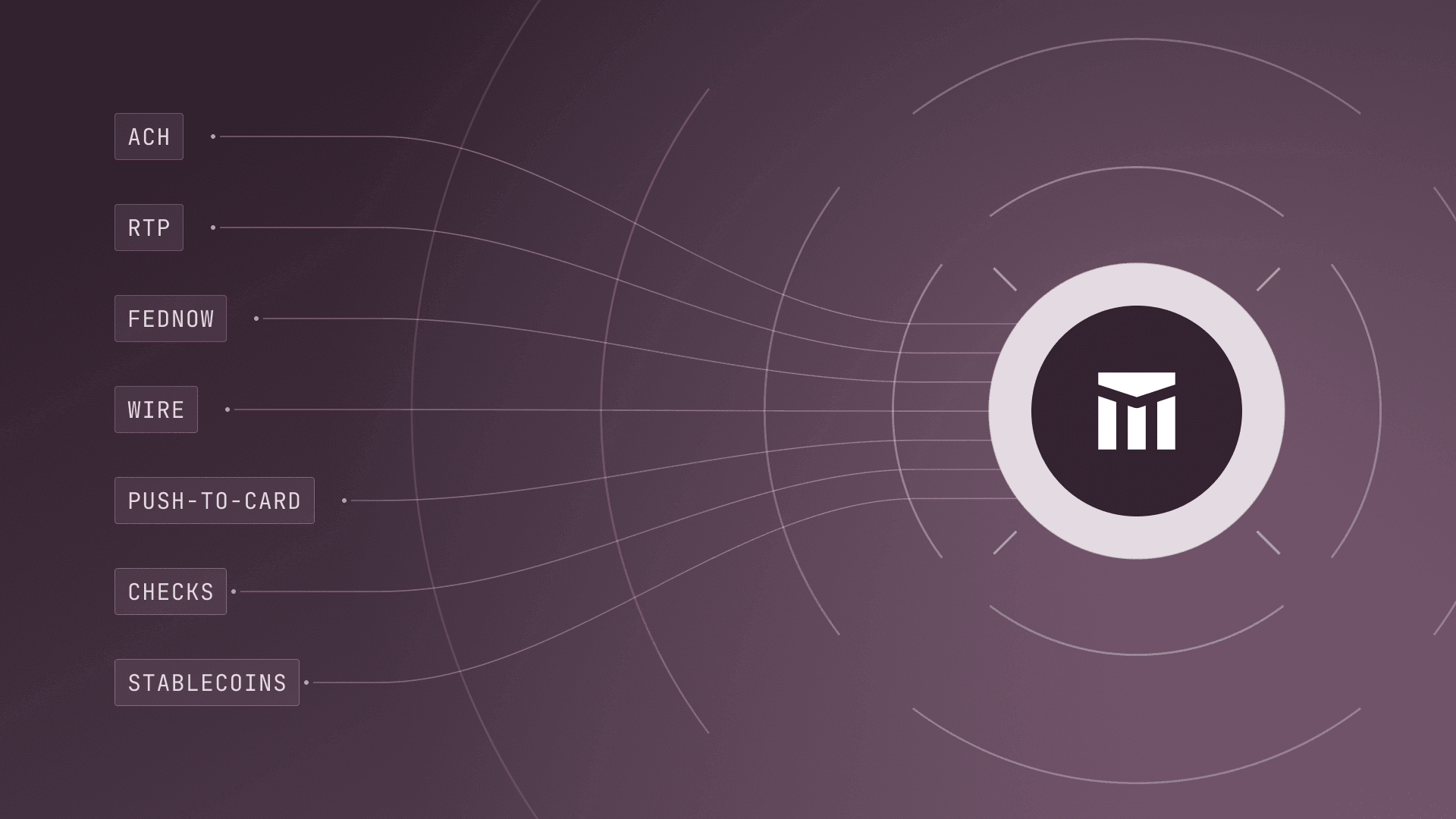
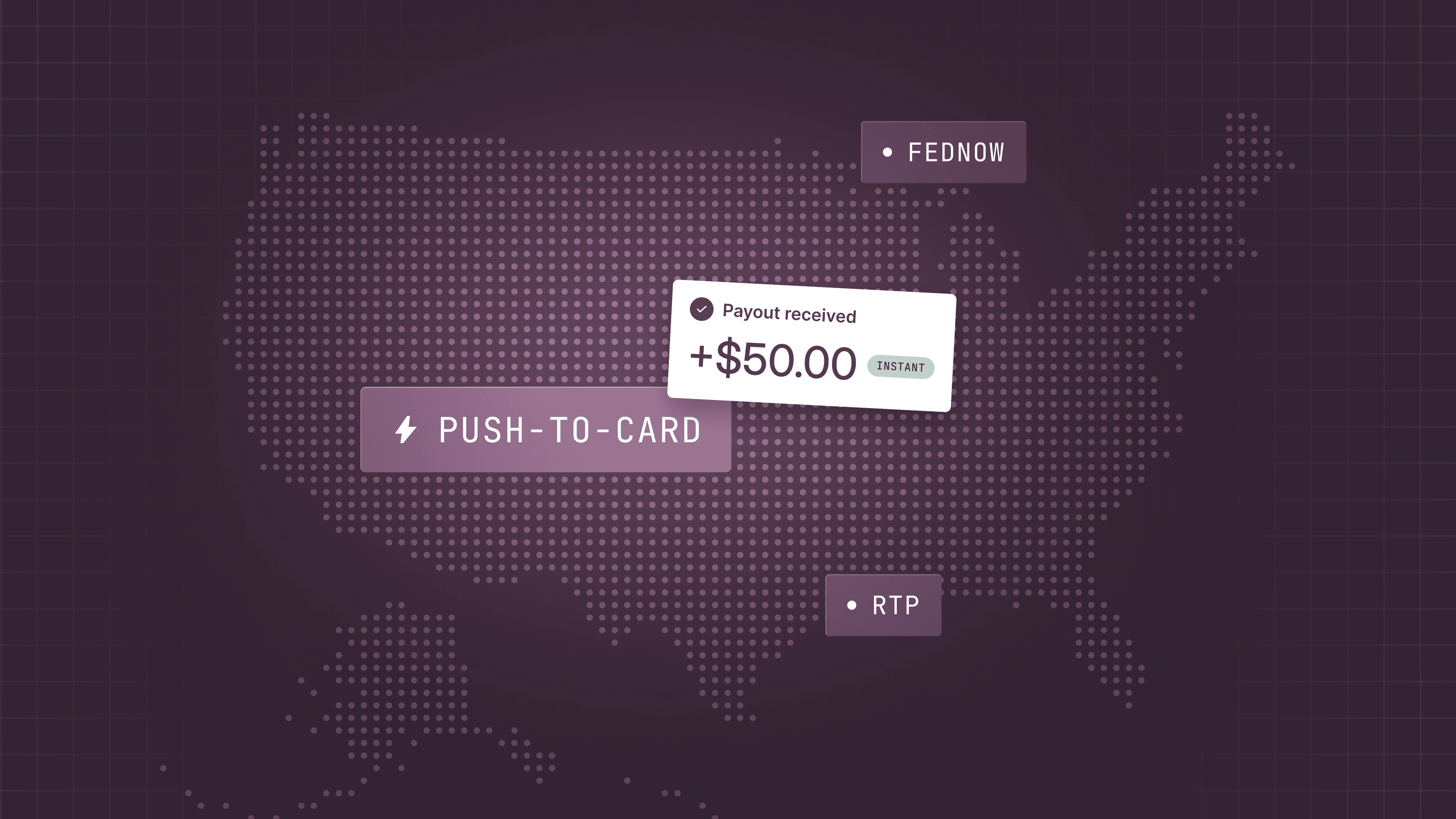
- Support for all major U.S. payment rails: ACH debits, ACH credits, wires, RTP, and FedNow
- Stablecoin interoperability to move seamlessly between USD and major stablecoins like USDG, USDC, USDT, and more
- Embedded KYC/KYB and AML controls to build with confidence
- Unified ledgering to track all transactions, fiat or stablecoin, in real time
Combining these offerings into one product creates operational coherence that matters more than most people realize. When money movement and account state live in separate systems, every transaction becomes a coordination problem.
A payment that arrives via ACH needs to update a ledger, trigger a compliance check, and potentially initiate a stablecoin conversion, and if those steps are handled by different vendors, you're managing sequencing, failure states, and reconciliation across system boundaries you don't fully control.
A unified API turns each of those steps into a function call within the same execution context. The result: a smoother user experience and an easier workload for the platform.
Building with compliance at the core
Fragmentation also created problems for compliance just as much as it did for money movement.
Most teams were managing onboarding, transaction monitoring, sanctions screening, and account activity across disconnected systems and vendors, which introduced operational drag at every step: duplicate reviews, inconsistent risk logic, manual investigations, and disjointed audit trails.
We believed compliance infrastructure needed to sit inside the same operational system as money movement itself. So Global USD Accounts include onboarding, identity verification, AML monitoring, transaction screening, and ledgering natively within the platform infrastructure, not bolted on after the fact.
Looking ahead
Taken together, these capabilities reflect something broader: global money movement is becoming increasingly software-native, and the infrastructure needs to match.
Global USD Accounts will continue to expand in the months ahead, with inbound and outbound international wire transfers via SWIFT, Push-to-Card, check sending, FDIC pass-through insurance on eligible balances, programmable wallets, and support for received debits.
USD is also just the starting point for fiat systems we plan to modernize. We're working to extend the same infrastructure to additional currencies, so platforms can offer locally denominated accounts that connect natively to local payment rails. That eventually means EUR and SEPA in Europe, MXN and SPEI in Mexico and others, so that the same programmatic account model that works for USD can work wherever your users are, in the currency they use everyday.
Get the latest articles, guides, and insights delivered to your inbox.
Authors

Daniel Mottice is Head of Stablecoins at Modern Treasury. Previously, he led teams at Visa Crypto and Visa Direct Payouts, where he helped build infrastructure for instant disbursements and digital asset payments.