Programmable Stablecoin Wallets
Hold and Move Stablecoins

Go From Zero to Scale
Scale Forever
Integrate once and launch wallets across multiple blockchain networks as your business grows.
Unified Visibility Across Fiat and Stablecoins
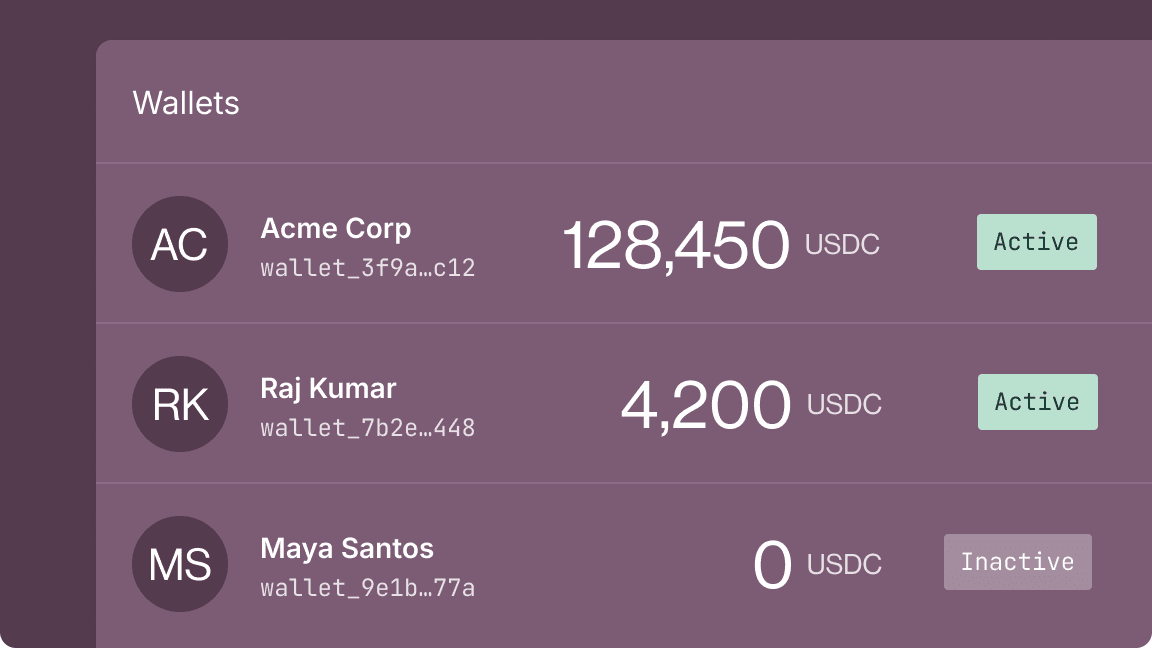
Get real-time visibility into wallet balances, transfers, and activity across fiat and supported stablecoins like USDG, USDC, and USDT.
Build with Ease
Skip the blockchain complexity. Modern Treasury provides the wallet infrastructure, key management, and onchain operations you need to build with stablecoins.
Usage-Based Pricing
Pay only for the wallets and transactions your business uses.
Built for Your Use Cases
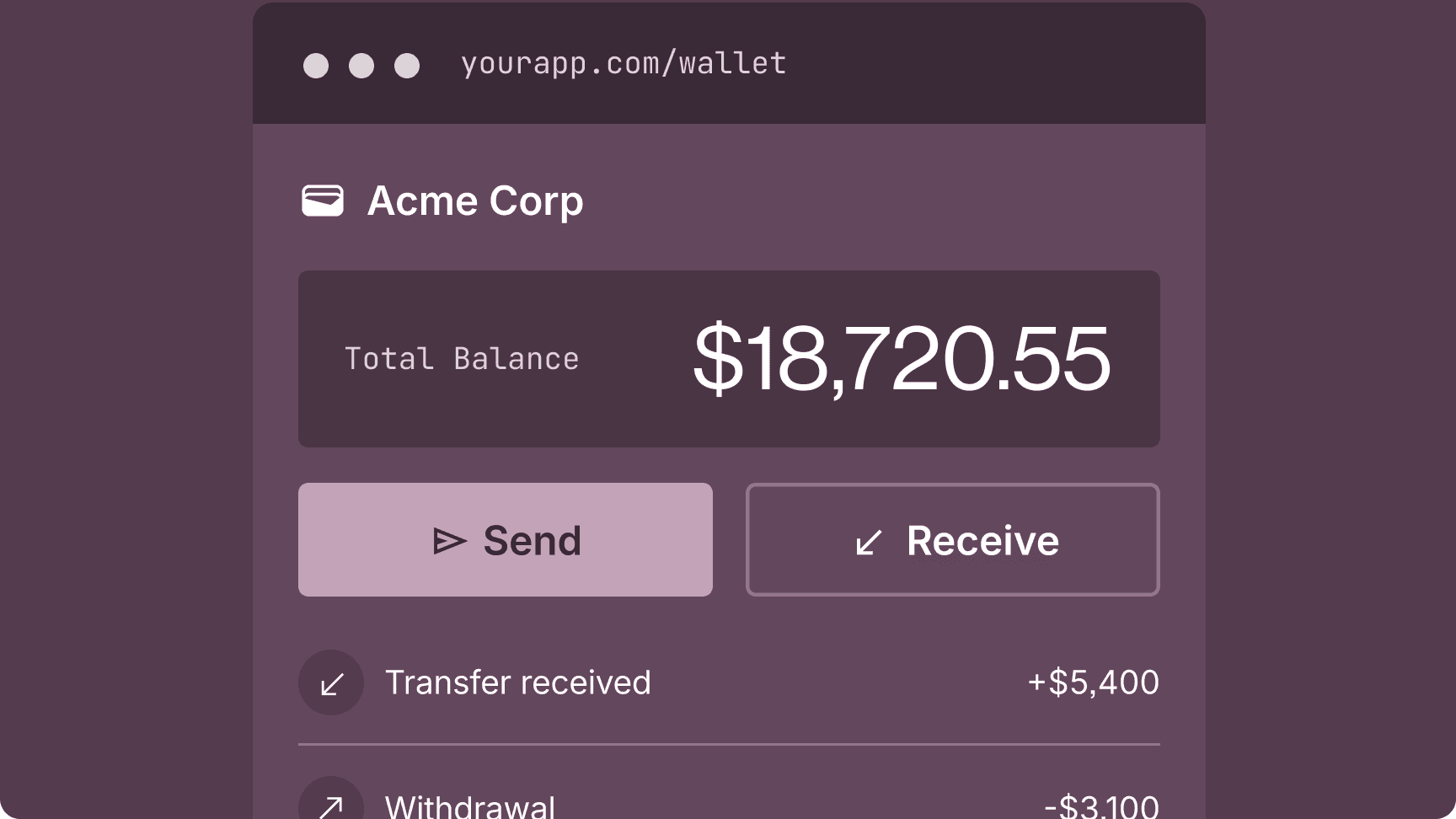
Embed Wallets
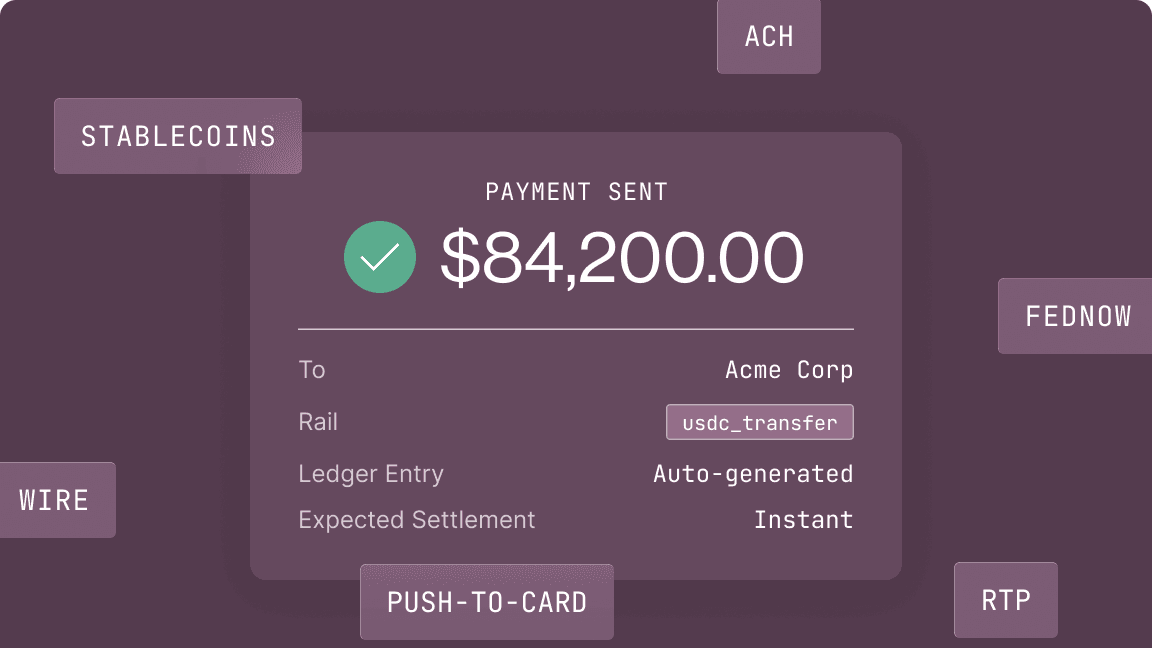
Combine Fiat & Stablecoins
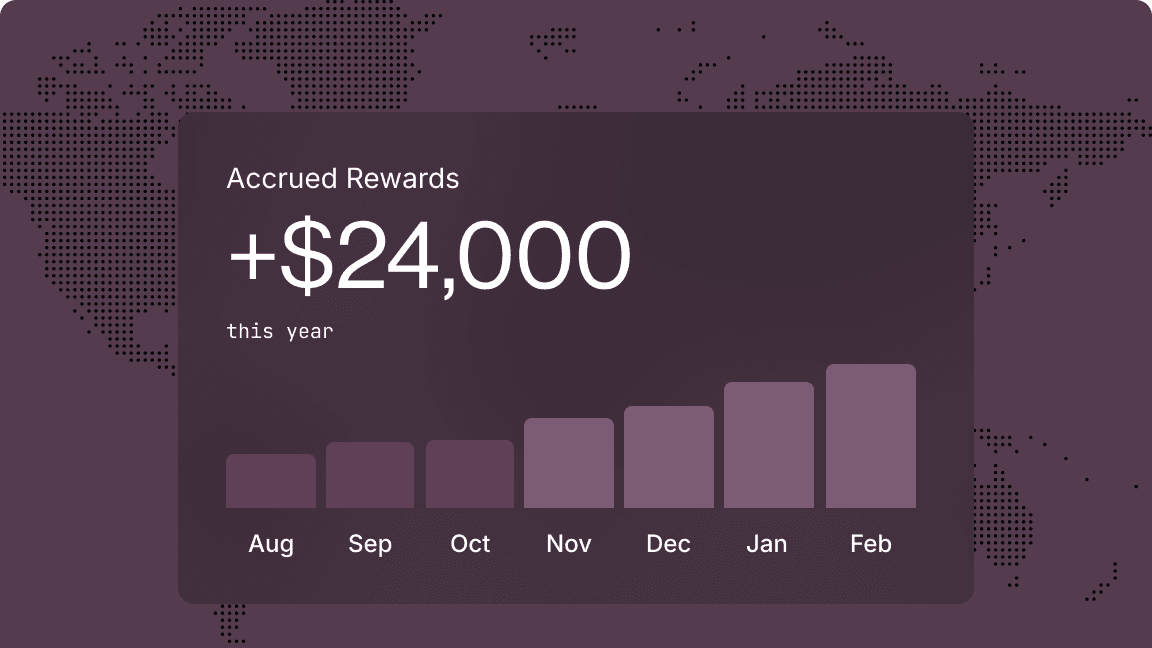
Power Rewards Products
Track Every Balance
FAQs
Programmable stablecoin wallets let businesses create, manage, and automate wallets that hold and move digital dollars like USDC, USDT, and USDG. Unlike consumer crypto wallets, programmable wallets are designed for developers, making it easy to embed wallet creation, transfers, permissions, and compliance into your product through APIs. Businesses use programmable stablecoin wallets to power payments, treasury, marketplaces, payroll, and embedded financial products.
Modern Treasury provides the wallet infrastructure you need to launch programmable stablecoin wallets without managing blockchain complexity. Through a single API, you can create wallets, send and receive stablecoins, monitor balances and transactions, manage keys securely, and integrate fiat payment rails alongside onchain transfers. Modern Treasury handles the underlying blockchain infrastructure so your team can focus on building your product.
Platforms can hold assets custodially via our partner, Paxos, for their own operations while giving end users self-custodied wallets, all on the same unified infrastructure.
Modern Treasury supports leading blockchain networks, including Ethereum, Solana, Base, and Polygon, allowing businesses to build stablecoin wallet experiences across the ecosystems their customers already use. We continue to expand network support as adoption grows.
Modern Treasury combines programmable stablecoin wallets and fiat payment infrastructure in a single platform. Unlike wallet providers focused exclusively on blockchain, Modern Treasury lets you manage both fiat and stablecoin experiences through one API while providing real-time visibility into balances, transfers, and transaction activity. This unified approach simplifies building financial products that operate seamlessly across traditional banking and blockchain networks.
Yes, products built on Modern Treasury can leverage USDG to power rewards.