Multi-Rail Payments: ACH, RTP, FedNow, Wire, Checks, and Stablecoins
Payment Rail Comparison
- Settlement
- T+1–T+2; T+0 with same-day ACH
- Availability
- Business days
- Direction
- Credit and debit (push and pull)
- Finality
- Reversible (returns up to 60 days)
- Cost
- Cents per transaction
- Limit
- High; same-day capped at $1M
- Reach
- Nearly all US bank accounts
- Best for
- High-volume recurring, payroll, low-cost debits
- Settlement
- T+0, instant
- Availability
- 24/7/365
- Direction
- Credit push only
- Finality
- Irrevocable
- Cost
- Low flat fee
- Limit
- Up to $10M
- Reach
- 1000+ financial institutions and growing
- Best for
- Instant B2B and disbursements
- Settlement
- T+0, instant
- Availability
- 24/7/365
- Direction
- Credit push only
- Finality
- Irrevocable
- Cost
- Low flat fee
- Limit
- Up to $10M; each bank may set a lower limit
- Reach
- 1800+ financial institutions and growing
- Best for
- Instant payments, broad bank reach
- Settlement
- T+0–T+1, banking hours
- Availability
- Banking hours
- Direction
- Credit push only
- Finality
- Irrevocable
- Cost
- $15–$30+
- Limit
- No network cap; limited by your bank
- Reach
- Domestic and cross-border
- Best for
- High-value, time-critical, cross-border
- Settlement
- T+1–T+5; varies by bank hold policy
- Availability
- Business days
- Direction
- Credit push only
- Finality
- Reversible (stop payment, NSF, fraud returns)
- Cost
- Low per check; high operational overhead
- Limit
- No standard cap
- Reach
- Nearly all US bank accounts
- Best for
- Traditional B2B accounts payable, legacy industry workflows
- Settlement
- Seconds to minutes, varies by chain
- Availability
- 24/7/365
- Direction
- Push only
- Finality
- Irreversible once confirmed
- Cost
- Network fee, varies by chain
- Limit
- Effectively uncapped
- Reach
- Any wallet on a supported chain
- Best for
- Cross-border, 24/7 liquidity, thin corridors
| Attribute | ACH | RTP | FedNow | Wire | Checks | Stablecoins (USDC, USDT, USDG) |
|---|---|---|---|---|---|---|
| Settlement | T+1–T+2; T+0 with same-day ACH | T+0, instant | T+0, instant | T+0–T+1, banking hours | T+1–T+5; varies by bank hold policy | Seconds to minutes, varies by chain |
| Availability | Business days | 24/7/365 | 24/7/365 | Banking hours | Business days | 24/7/365 |
| Direction | Credit and debit (push and pull) | Credit push only | Credit push only | Credit push only | Credit push only | Push only |
| Finality | Reversible (returns up to 60 days) | Irrevocable | Irrevocable | Irrevocable | Reversible (stop payment, NSF, fraud returns) | Irreversible once confirmed |
| Cost | Cents per transaction | Low flat fee | Low flat fee | $15–$30+ | Low per check; high operational overhead | Network fee, varies by chain |
| Limit | High; same-day capped at $1M | Up to $10M | Up to $10M; each bank may set a lower limit | No network cap; limited by your bank | No standard cap | Effectively uncapped |
| Reach | Nearly all US bank accounts | 1000+ financial institutions and growing | 1800+ financial institutions and growing | Domestic and cross-border | Nearly all US bank accounts | Any wallet on a supported chain |
| Best for | High-volume recurring, payroll, low-cost debits | Instant B2B and disbursements | Instant payments, broad bank reach | High-value, time-critical, cross-border | Traditional B2B accounts payable, legacy industry workflows | Cross-border, 24/7 liquidity, thin corridors |
Where Single-Rail Setups Get Brittle
Adding a rail
Rail by rail, each new rail is its own integration with its own formats and return codes, landing in weeks to months. On Modern Treasury, ACH, RTP, FedNow, wire, push-to-card, checks, and stablecoins run through one API, so a new rail takes days with no re-architecture.
Reconciliation
When each rail reports on its own, balances fragment and reconciliation goes manual. Modern Treasury posts every transaction to one ledger, a single source of truth for balances, reporting, and audit.
Routing
Hard-coded rail logic is brittle and has no failover. Modern Treasury makes routing programmable: which rail to use, when to settle, and which liquidity source to draw from.
Compliance
Rebuilding KYB, KYC, and monitoring for each bank and blockchain rail fragments risk. Modern Treasury runs the same controls across fiat and stablecoin rails on one platform.
Payments Processed
Across Fiat and Stablecoins
Not Months to Go Live
Different Businesses, Different Rail Strategies
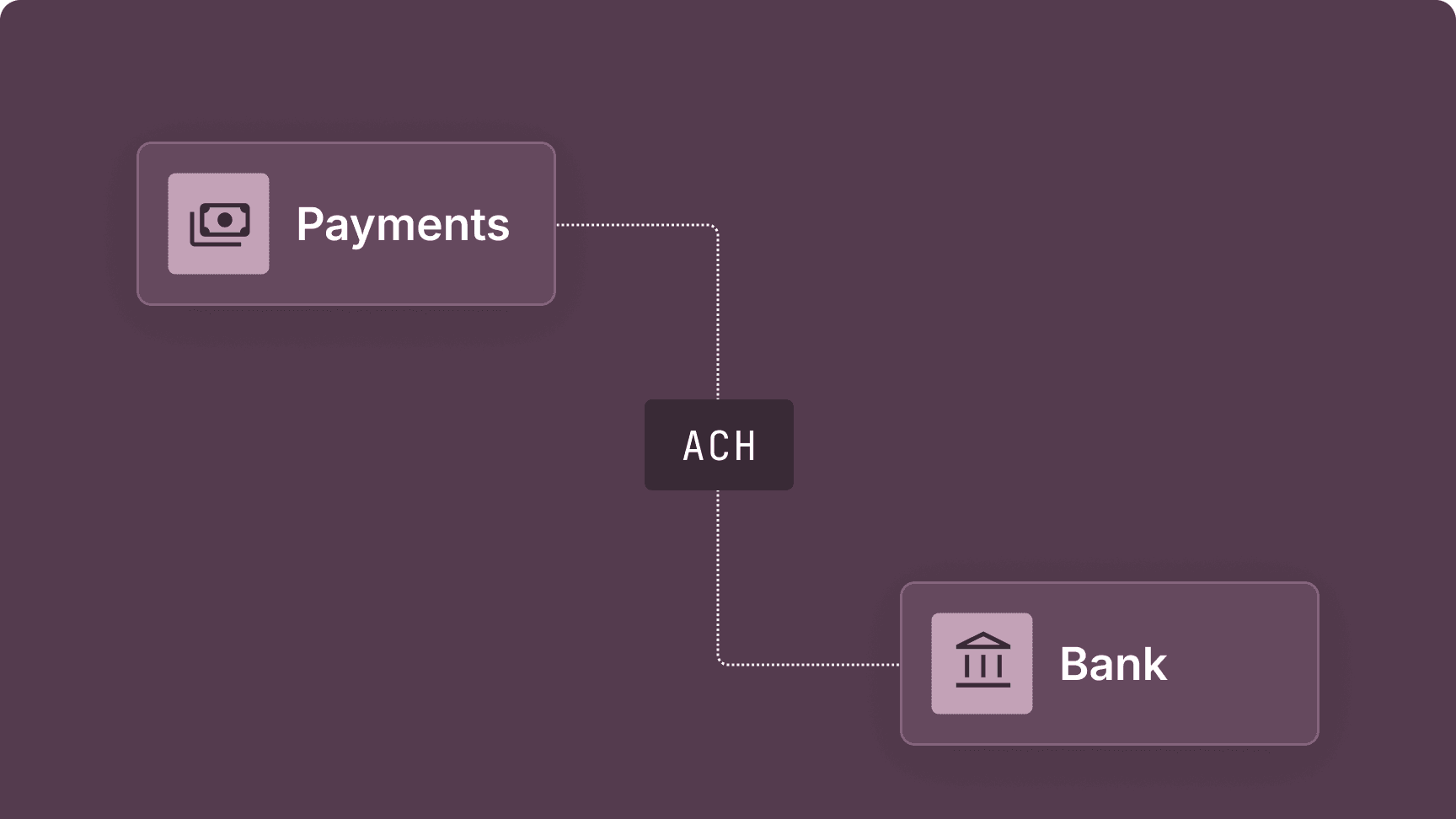
A single rail is the right call when:
- Your payments are domestic, denominated in a single currency, and limited to one payment type.
- Volume is low, payment frequency is consistent, and you're not moving against the clock.
- You don't need instant settlement, debit pulls, or cross-border reach.
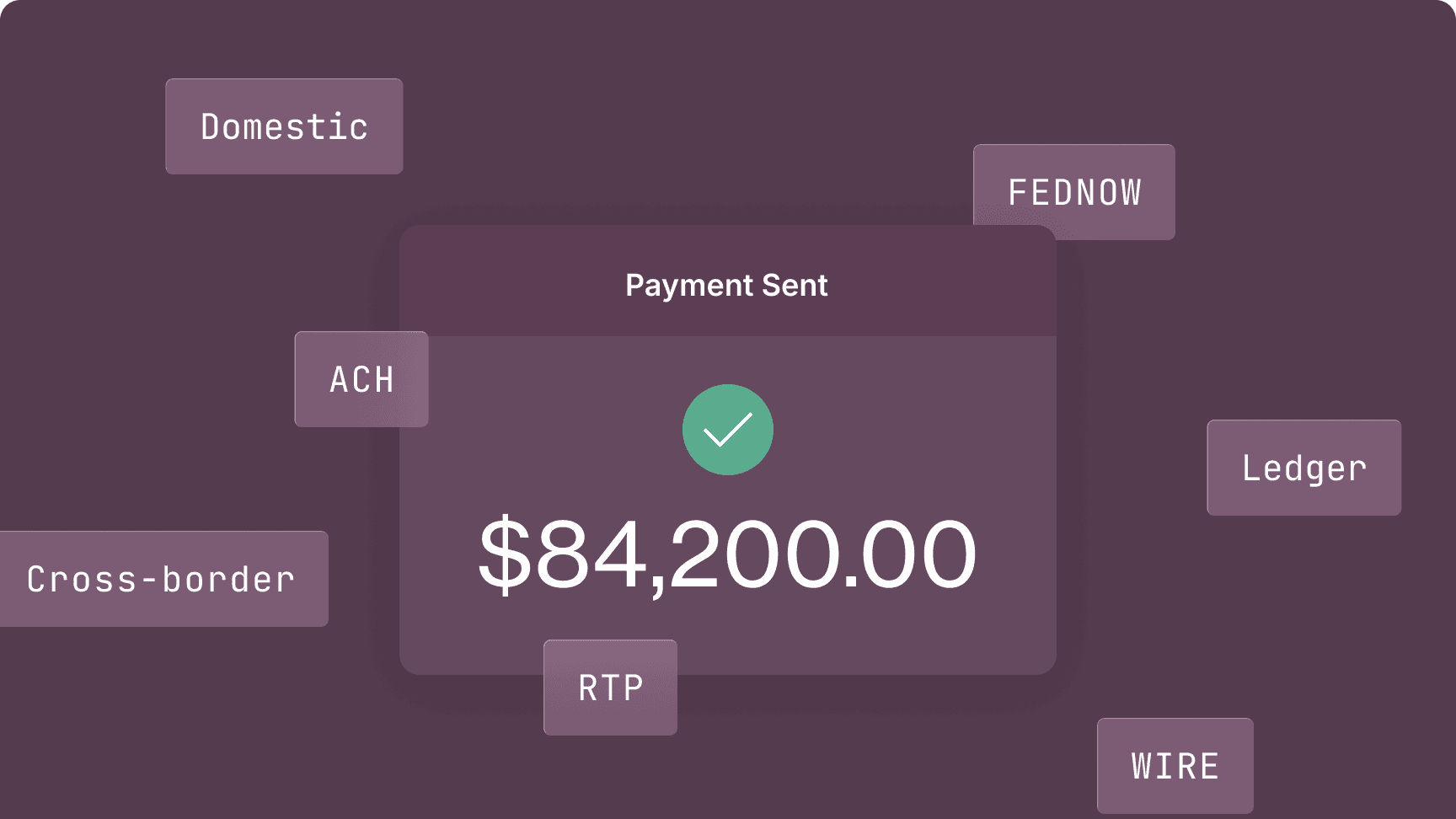
Multi-rail through Modern Treasury is the right call when:
- You need to match multiple payment types to the right rail.
- You need ACH, RTP, FedNow, wire, push-to-card, checks, and stablecoins on a single platform.
- You manage sub-accounts or third-party funds and need a real-time ledger across every rail.
Common Questions About Multi-Rail Payments
ACH settles in one to two business days, or same-day within NACHA windows. It supports credit pushes and debit pulls and is the lowest-cost rail at volume. RTP and FedNow are both instant, settle in seconds, run 24/7/365, and are credit-push only. The difference between them is operator and reach: RTP is run by The Clearing House, FedNow by the Federal Reserve, and a bank may participate in one, both, or neither.
Both settle instantly and irrevocably and are push-only, so the choice comes down to which network the receiving bank is on and your transaction limits. RTP currently supports higher limits. FedNow's bank base is growing faster. Platforms that want the widest reach support both and route by receiving institution.
Use ACH when cost matters more than speed and one-to-two-day settlement is fine, like recurring payments, payroll, and high-volume debits. Use RTP or FedNow when a payment must settle in seconds or be final on arrival. Use a wire for high-value, time-critical transfers where the amount justifies the fee.
ACH fits domestic B2B where one-to-two-day settlement works and both parties have US bank accounts. Stablecoins fit cross-border B2B, where correspondent banking adds days and FX overhead, or treasury that needs 24/7 liquidity. The blockchain is the rail and the stablecoin (USDC, USDT, USDG) is the denomination, the same relationship as USD to ACH. Many platforms run both, reconciled in one ledger.
It comes down to four properties: speed, cost, finality, and reach. Time-sensitive payments favor RTP, FedNow, or stablecoins. High-volume payments favor ACH. High-value or cross-border payments favor wire or stablecoins. Pulls require ACH, since instant rails are push-only. Rail selection is a product decision, and it's the one multi-rail infrastructure exists to make programmable.
Yes. Modern Treasury provides payments across ACH, RTP, FedNow, wire, push-to-card, checks, and stablecoins through one API, with each rail configurable for routing, limits, and returns, and a double-entry ledger tracking balances across all of them in real time. That replaces separate integrations, vendors, and reconciliation per rail.