Modern Treasury Applies to Establish National Trust Bank. Read the Press Release →
Beyond BaaS: How Modern Treasury Is Built to Run Payments at Scale
What BaaS failures revealed about ledgering, compliance, and accountability—and how Modern Treasury’s PSP model is built differently for B2B payments.

For the last few years, “Banking-as-a-Service” has been used as a catch-all for anything that isn’t a chartered bank but touches money. The term stuck even as a number of BaaS programs failed—often loudly, often expensively.
I’ve spent years working on payments products and money transmission programs. Most of what broke in the BaaS era wasn’t an execution issue. It was structural.
So let’s start with a simple clarification.
Modern Treasury is not BaaS. And if you’re building or scaling a real payments business, that distinction has practical implications. You don’t need checking accounts or other consumer-focused bank services. You need access to payment rails, and often a platform that keeps you out of the flow of funds.
What BaaS Typically Requires
BaaS often comes with more complicated tri-party structures that have you contracting directly with a bank. In a traditional BaaS model, the platform provides APIs and tooling, but the customer is still operating a bank-sponsored program.
That usually means:
- Negotiating and maintaining direct bank sponsorship
- Operating (or outsourcing) a compliance program
- Managing ledgering and reconciliation across multiple systems and vendors
When something goes wrong, responsibility is spread thin: the bank, the BaaS provider, and the customer all own part of the problem. Sometimes, no one owns it end-to-end.
This model can work for certain consumer banking or neobank use cases. It assumes the customer wants to run a bank program—and has the staffing, regulatory expertise, and risk tolerance to do so.
Most companies building B2B payments products do not want or need this.
They want to move money reliably, at scale, with clear ownership when things break.
What Failed BaaS Models Revealed
When high-profile BaaS programs failed, the most visible symptom was missing or misattributed funds. This translated to real-world pain for consumers and small businesses, some of whom are still waiting for funds from failed programs and platforms.
That outcome is almost never about APIs or dashboards.
At scale, payments systems fail when ledgering and reconciliation are not treated as core infrastructure. Without a real-time, authoritative ledger and a single party accountable for it, small discrepancies compound quickly.
There’s a reason companies like Square invested heavily in ledgering early. Payments don’t scale safely without it.
Many teams learn this lesson later, often after bringing in consultants to rebuild systems that should have existed from day one.
Ledgering is not a feature. It is the system of record that makes payment operations trustworthy.
How Modern Treasury Is Built Differently
Modern Treasury took a different approach from the start.
Rather than offering tooling around bank-sponsored programs, Modern Treasury operates a fully managed payment service provider (PSP) built to help companies launch and scale B2B money movement without running their own bank programs.
Customers:
- Do not interact directly with bank partners
- Do not operate their own compliance programs
- Do not stitch together ledgering and reconciliation across vendors
All payment activity runs within Modern Treasury’s infrastructure and compliance program, built on the same orchestration layer and proprietary ledger that has processed more than $400 billion in payments for our software customers.
That includes:
- A real-time ledger designed for complex payment flows
- Reconciliation that assumes failures will occur and accounts for them
- Clear, centralized ownership and accountability of the movement of funds
- Experienced bank partners to handle all money movement and holding of funds
This platform is intentionally focused on B2B payments. It is not consumer banking. There are no checking accounts. Funds move through the system—they are not parked in it.
Lessons for Fiat and Stablecoin Infrastructure
Two industry shifts are happening at the same time.
First, many companies that need payments are constrained less by software than by bank onboarding timelines, misapplied consumer banking requirements, and program complexity. Even strong teams with real demand can spend months waiting to move their first dollar. Modern payment infrastructure has to reduce that friction, not introduce more of it.
Second, the industry is converging around fiat and stablecoins, but most platforms handle only one well. Stablecoin-native platforms often struggle with traditional rails. Legacy payment platforms tend to bolt stablecoins on as an afterthought. Infrastructure built for the next decade needs to treat both as first-class rails from day one.
Modern Treasury brings deep fiat payments infrastructure and stablecoin-native support together under a single ledger and control plane. Increasingly, that combination isn’t optional for modern payment products.
Fully Managed PSP vs. Traditional BaaS
This is a structural difference, not a semantic one.
| Modern Treasury | Traditional BaaS | |
|---|---|---|
Category | Fully managed payment service provider (PSP) | Bank-sponsored Banking-as-a-Service |
Bank Relationships | Managed by Modern Treasury | Managed by the customer |
Compliance Program | Runs within Modern Treasury’s compliance program | Customer operates or outsources compliance |
Ledgering | Real-time, authoritative ledger operated by Modern Treasury | Often fragmented across vendors or customer systems |
Reconciliation | Built-in and continuously enforced | Typically customer responsibility |
Accountability | Centralized with Modern Treasury | Distributed across bank, BaaS provider, and customer |
Primary Focus | B2B payments and money movement | Consumer banking and neobank use cases |
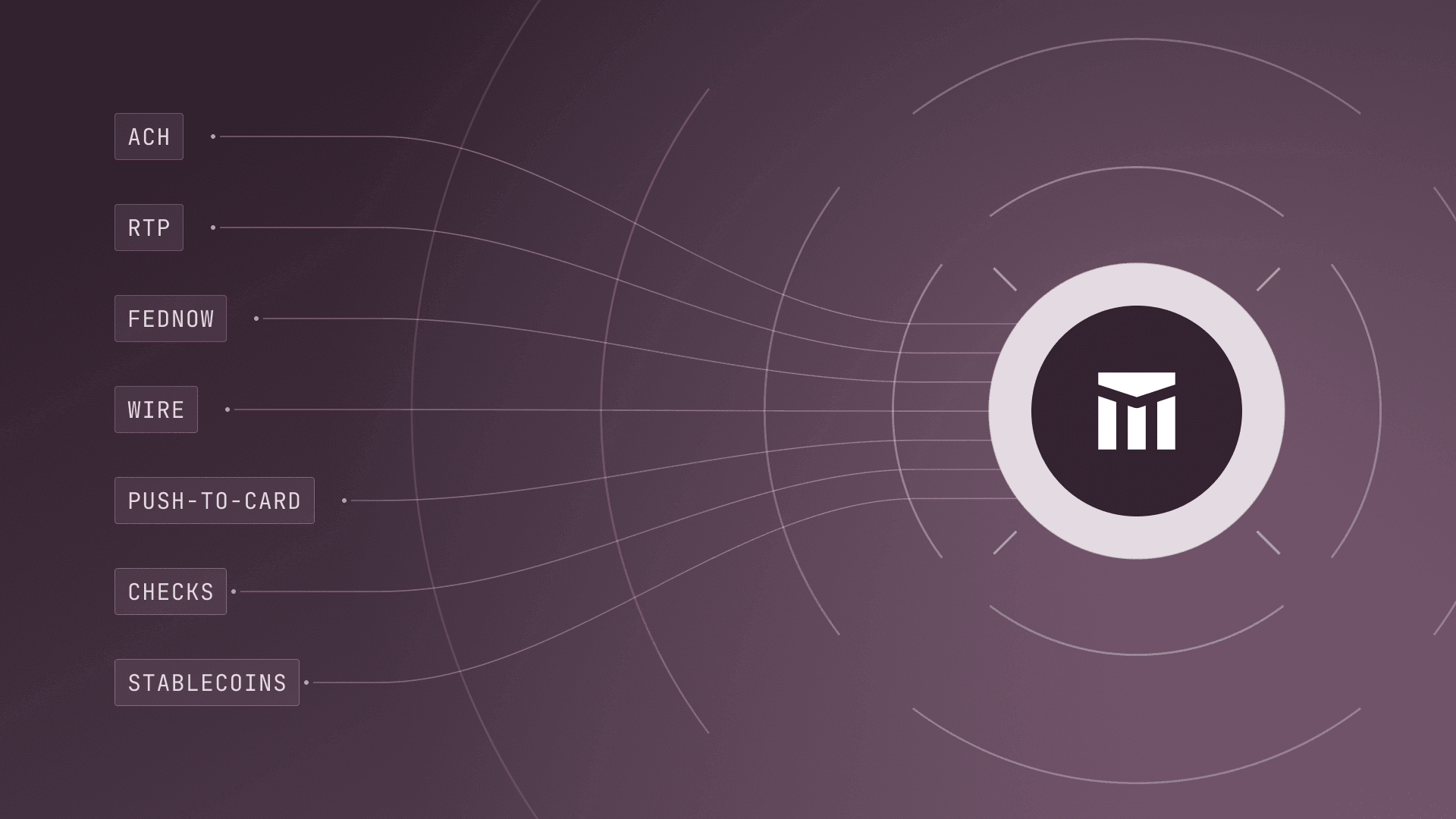
Payment rails | ACH, wire, RTP, FedNow, and stablecoins | Often limited or uneven across rails |
Customer burden | No bank program management required | Customer runs a bank sponsored program |
Comparing Modern Treasury to a “BaaS” obscures how the platform actually works.
BaaS models require customers to manage bank programs. Modern Treasury provides a fully managed payments service.
BaaS distributes responsibility across multiple parties. Modern Treasury centralizes accountability.
BaaS is typically optimized for consumer banking abstractions. Modern Treasury is built for B2B payments and money movement across ACH, wire, RTP, FedNow, and stablecoin rails.
I joined Modern Treasury because this distinction matters. Not as a positioning exercise, but as a practical one. If you agree, make sure to get in touch about our new payment solutions.
Get the latest articles, guides, and insights delivered to your inbox.
Authors

Matt Janiga is a payments and regulatory expert with more than a decade of experience building and advising on large-scale financial infrastructure. He has held senior legal and regulatory roles at Trustly, Lithic, Stripe, Square, and BlueVine, where he worked closely with product and engineering teams on payment systems, bank partnerships, compliance programs, and money movement at scale. Matt brings practical knowledge of how payments and regulatory systems operate in the real world.