Fiat + Stablecoins: Multi-Rail Infrastructure
How payments teams can operate across ACH, RTP, FedNow, wires, and stablecoins without creating operational complexity.

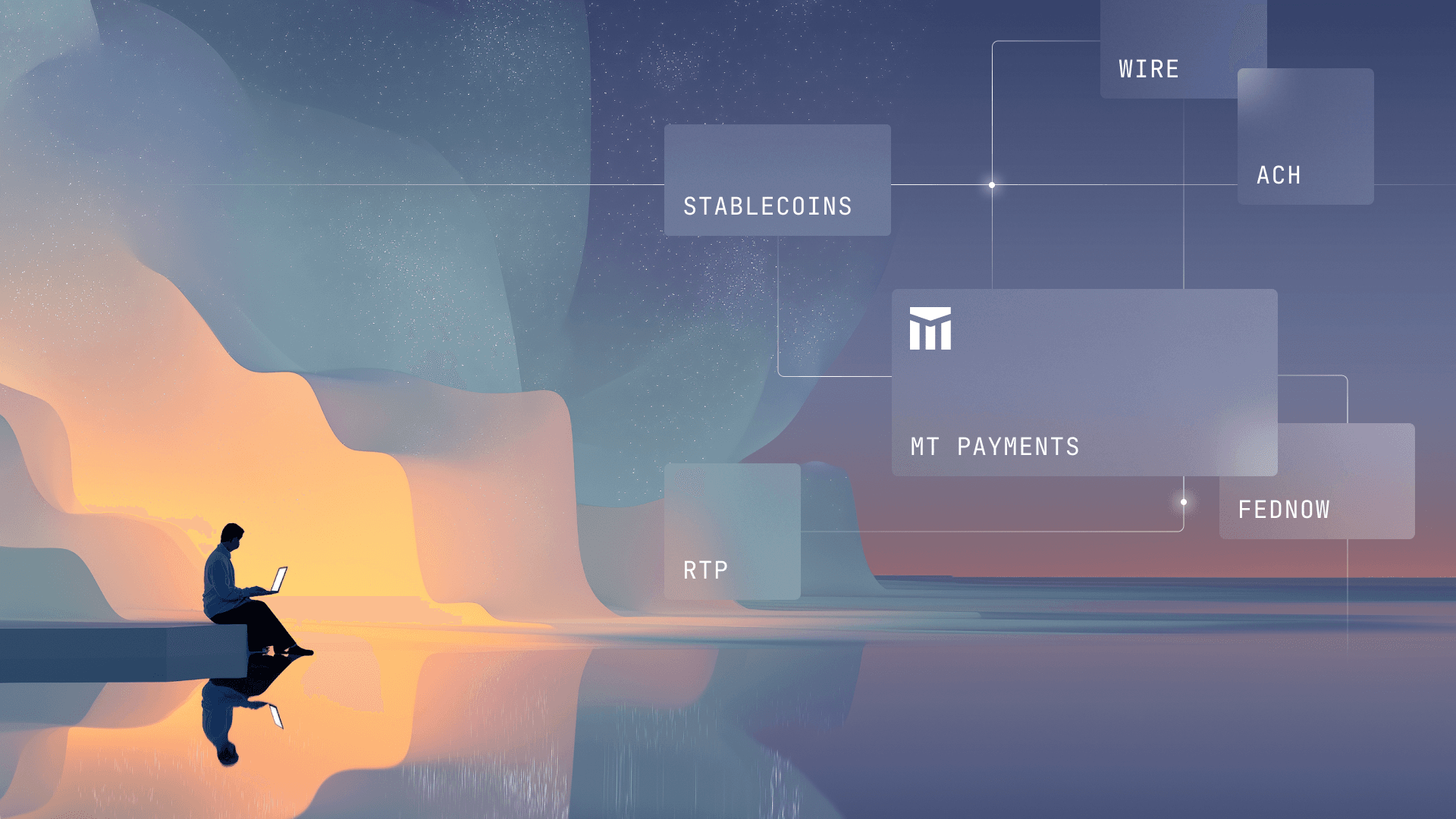
For most of the past decade, fiat payments and blockchain payments have lived in completely separate systems. Fiat systems moved money between bank accounts, blockchain systems moved value between wallets.
That separation made sense when the two worlds rarely interacted, but stablecoins are starting to change that by moving money alongside ACH, RTP, FedNow, wires, and cards.
Two payment systems built separately
Traditional payment rails were built for the banking system.
ACH, wires, RTP, FedNow, and cards all operate within regulated financial infrastructure. Accounts are bank accounts. Settlement happens through banks. Reconciliation, reporting, and compliance are designed around that model.
Stablecoin infrastructure emerged from a different environment.
Transactions settle on-chain. Accounts are wallets. Liquidity moves 24/7/365 rather than within banking hours, and stablecoin rails are global by default. For a long time, companies that needed both simply ran two stacks: one system for fiat payments and one system for blockchain activity. That worked while stablecoins remained a nascent rail.
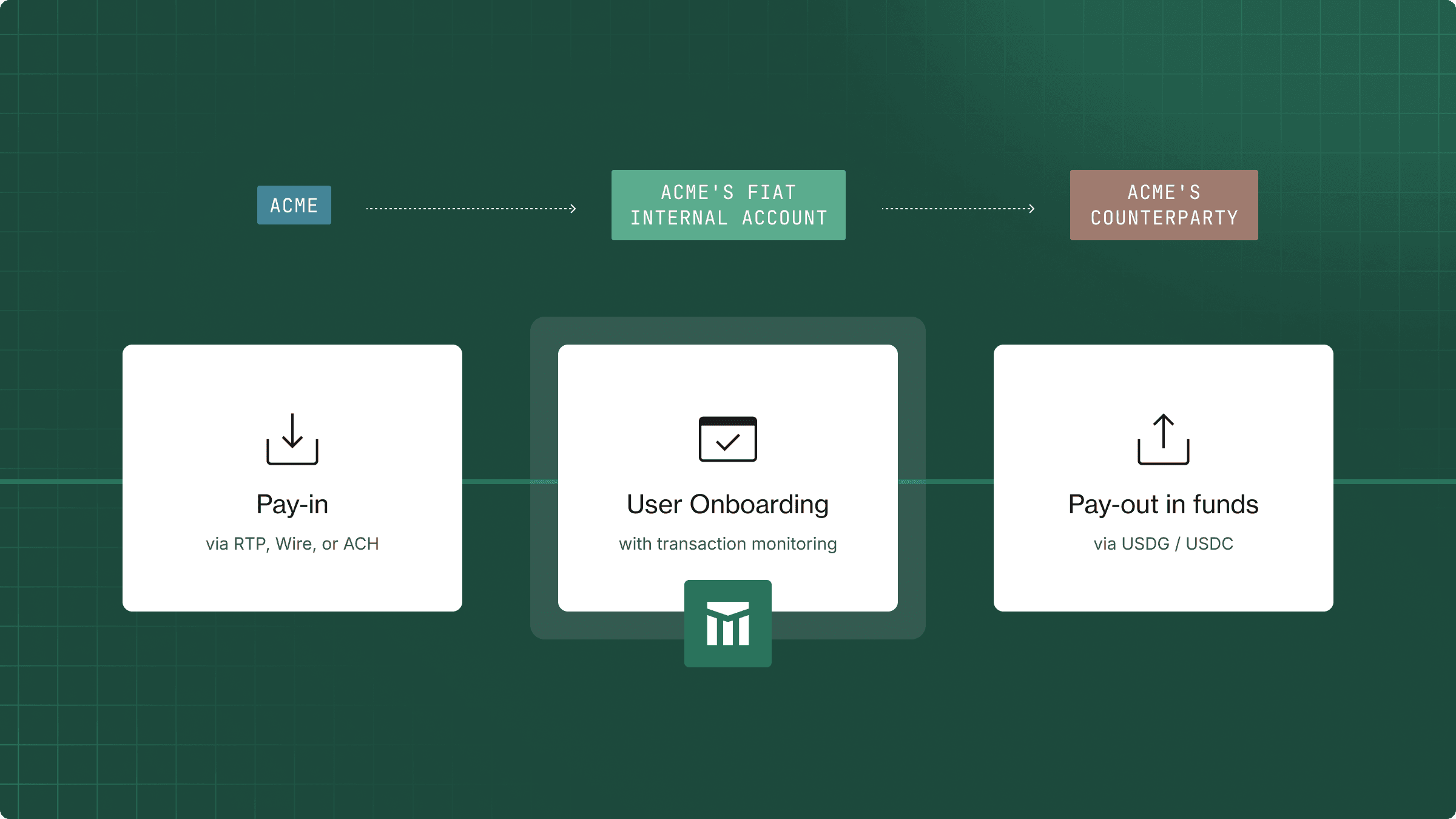
Now, in a world where exchanges settle treasury balances in USDC, fintechs support stablecoin payouts, and platforms manage liquidity across wallets and bank accounts, teams need a cleaner way to integrate the two systems.
Where the separation breaks down
Once stablecoins begin interacting with traditional payment rails, the costs of running separate systems become more obvious.
Reconciliation gets harder. Bank settlement files, blockchain transactions, and internal ledger activity all need to be matched across disconnected systems. Finance teams lose a clean source of truth. Fiat balances live in bank portals or reporting systems, while stablecoin balances sit in wallet infrastructure or blockchain tools.
Compliance becomes fragmented, too. Teams end up stitching together sanctions screening, transaction monitoring, and KYB/KYC processes across banking partners, wallet providers, and analytics vendors.
These are often framed as stablecoin problems. In practice, they are payment infrastructure problems. They reflect a payments stack built around a single-rail model in a world that is becoming multi-rail.
Payments are becoming multi-rail
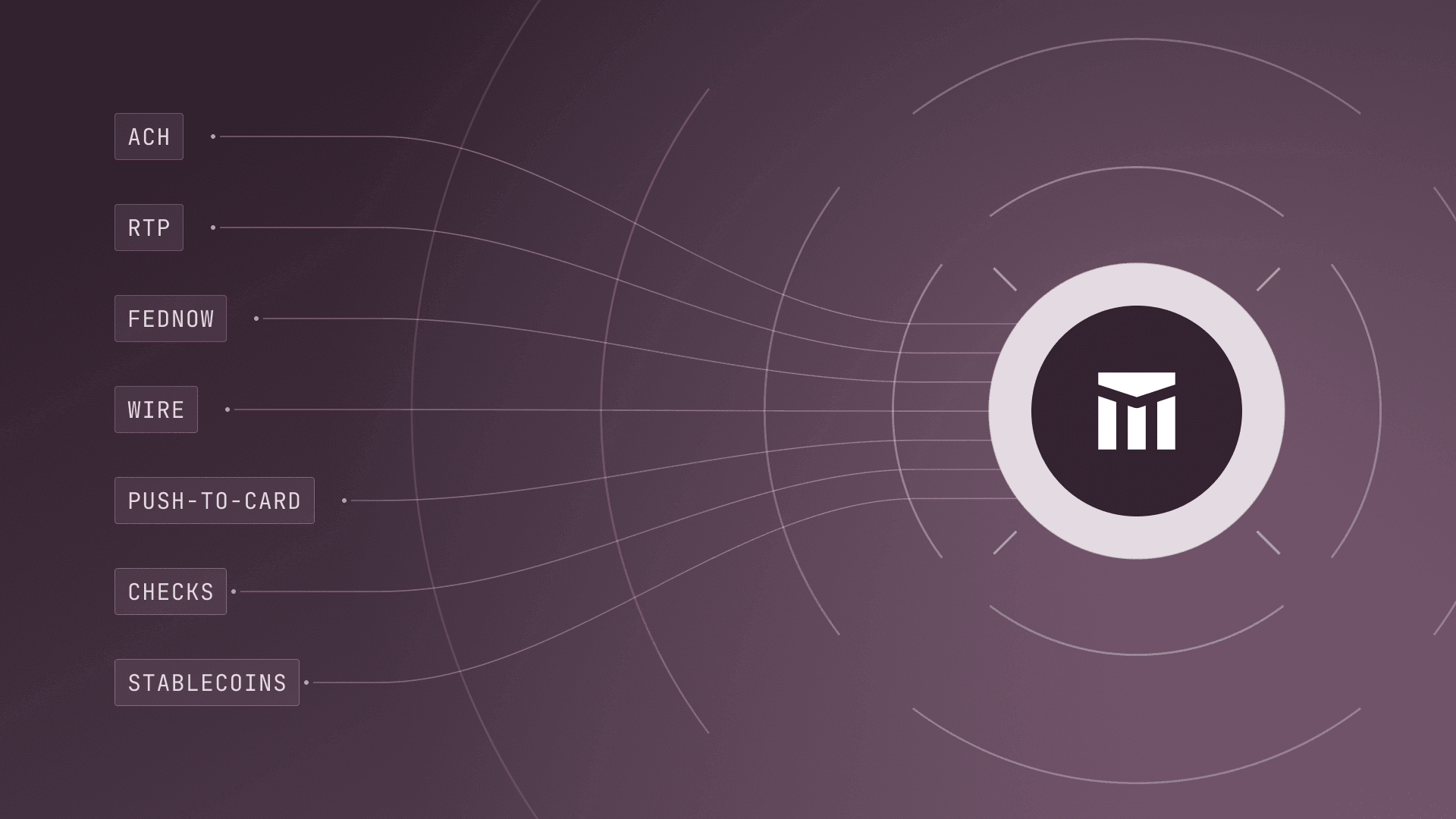
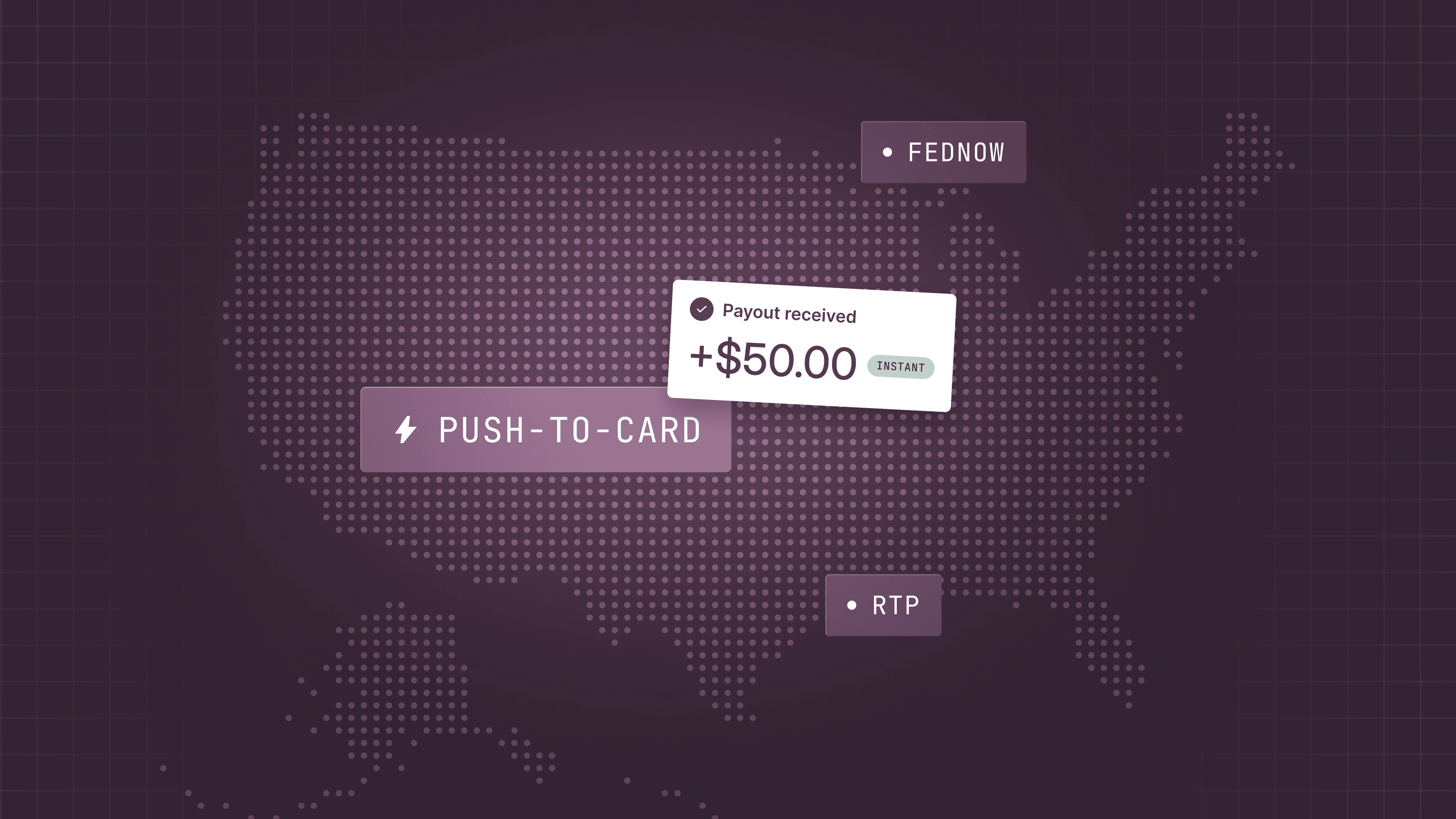
Payments teams are no longer choosing one rail instead of another. They are increasingly operating across several rails at once and using each one where it is the best fit. ACH for routine account-to-account transfers. RTP or FedNow for instant domestic payouts. Wires for high-value or time-sensitive settlement. Stablecoins for global liquidity management and programmable settlement.
Each rail has strengths. The challenge is not access. It is coordination.
The real question is: how do payments teams operate across ACH, RTP, FedNow, wires, and stablecoins without introducing more operational complexity every time they add a new rail?
Because running a separate operating model for each one does not scale.
Every new rail adds another system to reconcile, another settlement process to monitor, another compliance surface to manage, and another set of counterparties or providers to integrate. Over time, the result is not flexibility. It is fragmentation.
What multi-rail infrastructure actually requires
Operating across multiple rails requires more than connectivity. It requires a shared operational layer. Three components matter most.
A unified ledger
Every transaction, regardless of whether it settles over ACH, wire, RTP, FedNow, or stablecoin rails, should post to the same ledger. That ledger becomes the source of truth for balances, reconciliation, reporting, and auditability. Without it, activity fragments across systems, and every downstream workflow gets harder.
Programmable routing and orchestration
Different rails solve different problems. A modern payments system should be able to encode that logic directly: which rail to use, when to settle, how to fund the transaction, and which liquidity source to draw from.
That might mean routing domestic real-time disbursements over RTP, high-value transfers over wire, and cross-border flows over stablecoin rails.
Those decisions should not depend on manual intervention. They should be programmable.
Consistent compliance controls
Compliance requirements do not disappear when a payment moves on-chain.
KYB, sanctions screening, transaction monitoring, approvals, and reporting all still matter. The infrastructure should make those controls consistent across rails, rather than forcing teams to rebuild them separately for bank and blockchain workflows.
Connecting bank rails and stablecoin rails
As stablecoin adoption grows, the need for a unified architecture becomes more important.
Systems built around a single rail must be reworked whenever a new rail is introduced. That creates unnecessary operational overhead and slows adoption. Multi-rail infrastructure changes that. It gives teams a consistent way to move, track, reconcile, and govern money regardless of how it settles.
That is what will matter most as payments continue to evolve. Not whether a transaction moves through a bank rail or a blockchain rail, but whether the underlying infrastructure can support both without forcing the business to operate two separate systems.
If you’re exploring multi-rail money movement, talk to our team about unifying fiat and stablecoin infrastructure through a single platform.
Get the latest articles, guides, and insights delivered to your inbox.
Authors

Daniel Mottice is Head of Stablecoins at Modern Treasury. Previously, he led teams at Visa Crypto and Visa Direct Payouts, where he helped build infrastructure for instant disbursements and digital asset payments.