A Builder’s Guide to Multi-Rail Money Movement
Understand multi-rail money movement, real-time settlement, and stablecoin integration—and how Modern Treasury helps teams build unified payment experiences.

Payment systems have seen more innovation in the last few years than in the last half-century. For a long time, companies built payment experiences around the constraints of the rails available to them, whether that meant ACH for low-cost transfers, wires for high-value payments, or cards for consumer checkout. But advances in instant payments, such as RTP and FedNow, coupled with increasing regulatory clarity around stablecoins, are reshaping user expectations for money movement and providing builders with greater flexibility in the experiences they can deliver to their customers.
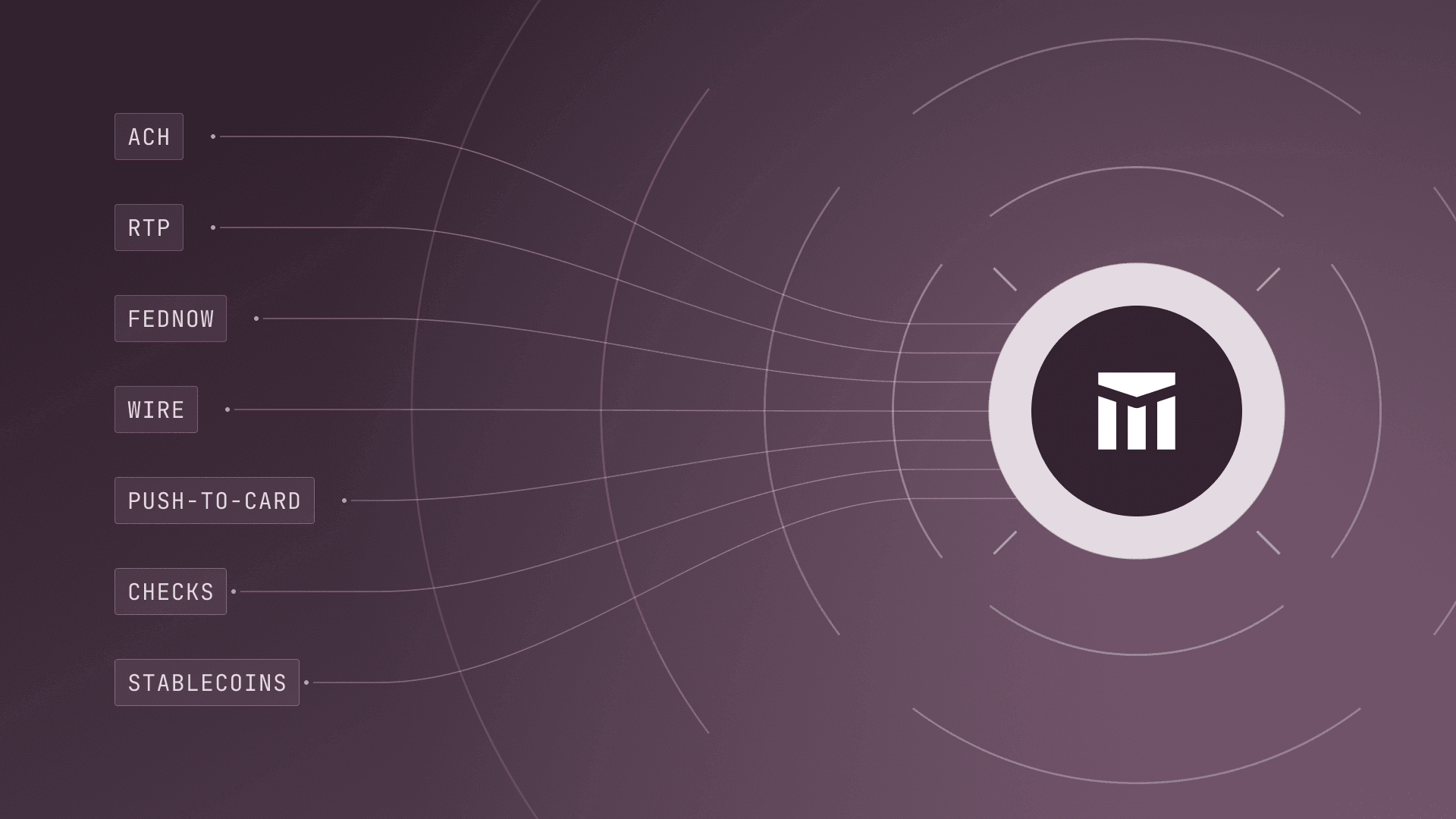
Multi-rail money movement refers to the ability to move funds across multiple payment rails—ACH, RTP, FedNow, push-to-card, and stablecoins—through a unified system that selects the best rail for each transaction. What once required tradeoffs between speed, cost, and geography is becoming a flexible, rail-agnostic approach to building modern payment experiences.
In our recent Tech Talk, I moderated a discussion between Modern Treasury CTO and co-founder Sam Aarons and Head of Beam Dan Mottice, where we talked about why multi-rail architecture matters and the role stablecoins can play. This article distills that discussion into a practical, forward-looking guide for builders navigating the shift toward instant, global, multi-rail payments.
What is Multi-Rail Money Movement?
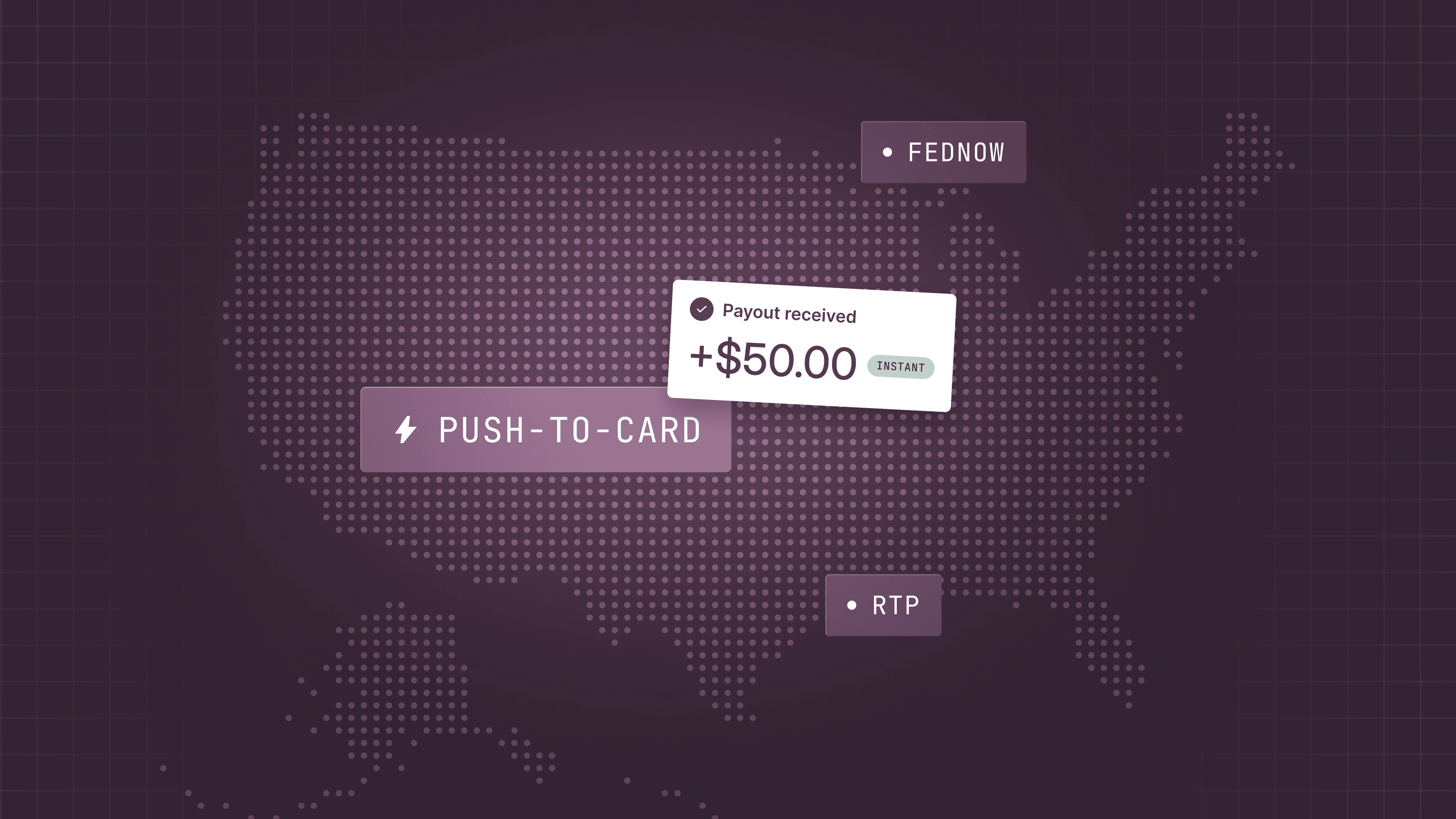
Rather than relying on a single payment rail, multi-rail systems give companies the flexibility to route funds over whichever rail best fits the needs of a given transaction. ACH remains well-suited for large volumes of low-cost payments. RTP and FedNow provide real-time settlement between banks, enabling new instant experiences. Push-to-card offers rapid funding to debit accounts. And stablecoins introduce a 24/7, globally accessible settlement option that is not bound by traditional banking hours and archaic messaging standards.
The defining characteristic of multi-rail systems is not the presence of many rails, but the fact that, as we say at MT, “Payment rails don’t die.” ACH didn’t disappear when RTP launched. RTP hasn’t replaced wires. Stablecoins haven’t eliminated cross-border banking. Rails have accumulated, each serving a different purpose. The challenge and opportunity for builders is to create consistent, reliable experiences on top of infrastructure that behaves very differently under the hood.
Why Multi-Rail Matters
A few years ago, ACH was the primary rail many companies built around, and it remains a core part of business payments today. But relying on ACH alone is no longer enough. Expectations around speed and finality have changed dramatically. Users, from consumers receiving refunds to contractors waiting for payouts to treasury teams moving liquidity, now expect money to move as quickly as everything else in their digital lives. When it doesn’t, teams see avoidable support volume, operational overhead, and delays that directly impact adoption and revenue.
Business models have also become more global, introducing new challenges for traditional rails. Cross-border payments remain slow, expensive, or limited by local infrastructure. Stablecoins offer a compelling alternative for these scenarios because they are available 24/7 and settle near-instantly, regardless of geography or banking windows.
These trends make single-rail architectures increasingly brittle. Teams that designed their systems around ACH or cards alone now face re-architecture when they need to introduce instant funding, global settlement, or alternative payment options. Flexibility and the ability for companies to be fluent in both fiat and stablecoin are becoming critical for teams that want to stay competitive and deliver modern payment experiences.
Where Stablecoins Fit Into a Multi-Rail Strategy
Although stablecoins originated in crypto markets, their role has expanded significantly. As Dan Mottice noted in the Tech Talk, stablecoins have largely decoupled from the volatility of other digital assets and have gained regulatory clarity thanks to the GENIUS Act. Recent action from the OCC, including conditional trust charters for several stablecoin and custody firms, has further strengthened the regulatory foundation for stablecoin-based payments.
Stablecoins are seen as an increasingly viable tool in a business’s money movement arsenal—not as an investment or speculative asset. On-chain analytics now distinguish clearly between payments and trading activity, and stablecoin adoption has continued to climb regardless of broader market cycles.
This shift is especially visible in cross-border and treasury contexts. Stablecoins allow companies to settle payments quickly across countries, move funds between corporate entities outside banking hours, and provide USD-equivalent balances to global sellers or contractors. The use cases don’t require users to interact with crypto-native tooling; in many cases, the blockchain component is abstracted away entirely.
However, stablecoins are not poised to replace card-based consumer experiences. Use cases like hotel check-ins, car rentals, and general in-person payments depend on card-network rules, authorization flows, and rewards systems that stablecoins do not replicate today. Stablecoins complement existing rails rather than displace them.
The Complexity Behind Multi-Rail Architecture
While multi-rail architecture unlocks new capabilities, it also introduces new challenges. Each rail has its own rules, messaging formats, and operational nuances. ACH follows Nacha rules and batch windows; RTP and FedNow use real-time messaging formats with unique return codes; stablecoin transfers involve blockchain semantics, gas fees, and travel-rule compliance.
If handled naïvely, these differences create fragmentation across engineering, product, compliance, and operations. Many teams end up with separate integrations for each rail, each producing its own data structures, exception paths, and reconciliation processes. Over time, this patchwork becomes difficult to maintain and slows down product development.
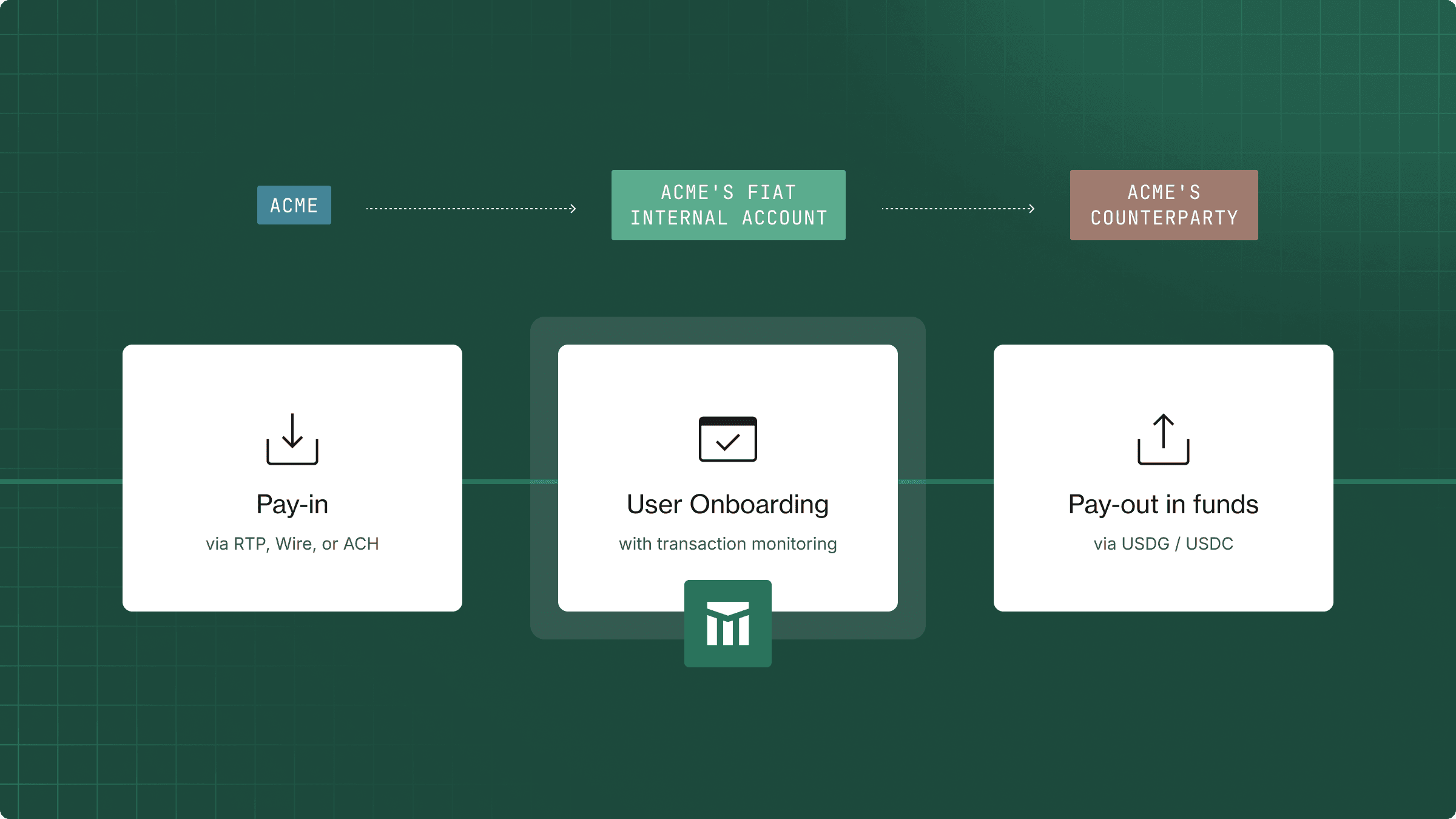
Compliance adds another layer of complexity. KYC, KYB, sanctions screening, transaction monitoring, and travel rule obligations differ across fiat- and blockchain-based rails. When these systems live in different silos, risk teams must reconcile data manually, increasing operational burden and introducing opportunities for error.
This is the core architectural challenge of multi-rail systems: how to offer a consistent user experience and operating model while the underlying rails behave very differently.
Design Principles for Multi-Rail Systems
A clear set of best practices has begun to emerge as companies build multi-rail systems. One of the most important is establishing a unified abstraction layer. Instead of embedding rail-specific logic throughout product code, teams define common primitives—payment orders, accounts, ledger entries—that behave the same regardless of which rail ultimately moves the funds.
A ledger-first architecture reinforces this approach by maintaining a single source of truth for balances and transactions. This avoids discrepancies across rails and simplifies reconciliation. It also enables real-time visibility, which becomes increasingly important when instant rails and stablecoins are in the mix.
An “instant-first” mindset is also key. Even if a company primarily uses ACH today, designing systems that can accommodate instant settlement prepares the product for future user expectations and market demands. Teams that defer this work often face costly rewrites later.
Finally, compliance systems must be unified across rails. As Sam Aarons pointed out, payment infrastructure now spans both bank-based and blockchain-based activity. Treating them separately creates unnecessary complexity. Risk and compliance workflows should operate on a shared set of data—regardless of which rail is used.
Why Unified Platforms Are Becoming Essential
Because of these challenges, companies are increasingly seeking platforms that simplify multi-rail orchestration. Instead of managing separate bank integrations, PSP contracts, stablecoin providers, ledgers, and compliance systems, teams want a single infrastructure layer that handles rail selection, orchestration, settlement, and monitoring consistently.
This is the direction Modern Treasury is taking as we integrate Beam’s stablecoin orchestration technology into our payments product. The vision is a unified system that supports ACH, wires, RTP, FedNow, push-to-card, and stablecoins through one API and one ledger, backed by built-in compliance that works across rails. For teams building payment experiences, this approach reduces months of infrastructure work and enables launches measured in days.
Preparing for the Multi-Rail Era
The multi-rail money movement has become the new foundation for modern payments. The companies that thrive in this environment will be those that treat rails as interchangeable tools, build on unified abstractions, adopt an instant-first mindset, and rely on infrastructure that removes complexity rather than adding to it.
For teams exploring instant payouts, global settlement, or stablecoin-based flows—or simply rethinking their payment architecture—Modern Treasury is building the platform designed for this new reality. If you’re evaluating a multi-rail strategy and want guidance or early access to our expanded payments offering, we’d love to talk.
Get the latest articles, guides, and insights delivered to your inbox.
Authors

Matt Craig is the Product Manager for Payments at Modern Treasury, responsible for architecting the company’s multi-rail platform that unifies bank rails and stablecoins into a single, developer-friendly system. Before joining MT, he built Payflows’ global treasury management platform with integrations to 50+ banks and held product and operations roles at Qonto and Back Market overseeing high-volume payouts and risk systems.